HTTP 429 in Multimodal AI Agents: Retry Budgets Without Cascading Failures
An engineering runbook for preventing HTTP 429 throttling from multiplying AI tool calls, costs and latency across real-time multimodal agent systems.

Production engineering guidance for securing remote MCP servers with OAuth audience-bound access tokens, resource metadata, least privilege, tenant isolation and negative tests.
How to size and monitor TURN relays for live AI avatar video: ICE candidate selection, regional routing, bandwidth economics, authentication and reliable fallbacks.
Why real-time AI avatars lose lip sync even on good networks, and how to measure WebRTC jitter, rendering clocks, animation queues, and interruption recovery.
A defensive analysis of the October 2026 Tencent–Amap agent incident: containment, browser tools, evaluation design, network egress controls and audit logs.
A practical engineering guide to WebRTC jitter buffering, voice latency instrumentation, interruption state machines and reliable streaming AI conversations.
ServiceNow announced AI Passport on October 15, 2026. Here is a practical guide to agent identity, runtime authorization, scoped delegation, revocation, and rollout caveats.
A production checklist for Gemini 4 Argon migration, from context budgets and thinking levels to December price changes and rollback gates.
An engineering guide to defending document-grounded AI agents against prompt injection, from retrieval provenance and scoped tools to adversarial tests and incident response.
A practical architecture for AI agent tracing, idempotent tool actions, privacy-safe telemetry, replay tests and actionable reliability metrics.
A practical framework for testing multimodal AI streaming, including first-response latency, audio gaps, turn completion, retries and user-visible failures.
A practical guide to routing AI inference across regions, measuring latency, respecting data boundaries and avoiding unnecessary infrastructure duplication.
How AI agents can persist intended external actions before sending email, webhooks or transactions so retries do not duplicate side effects.
How AI teams can version prompts, labels, datasets and scoring rules so evaluation results remain comparable across releases.
How AI inference platforms can pause or evict lower-priority GPU work so voice, chat and real-time agents keep predictable latency.
How RAG systems can propagate deletions across source stores, chunks, vectors, summaries and caches instead of removing only the original file.
How AI agents can declare tool scopes, allowed actions and approval requirements in a machine-readable permission manifest.
How long-running AI agents can persist deterministic checkpoints so crashes and retries resume from known state instead of repeating work.
How AI systems can invalidate prompt and context caches when knowledge, policy, permissions or model versions change.
How AI services can protect latency and reliability by deciding which requests enter the system before queues become overloaded.
How to evaluate whether RAG answers cite enough supporting evidence, not just whether at least one citation appears somewhere in the response.
How AI agents can use short-lived credentials for tools and APIs so automation works without permanent secrets or unlimited account access.
How AI services can use warm GPU pools, predictive scaling and workload tiers to reduce cold starts while controlling idle infrastructure cost.
How to sample AI agent traces for debugging, quality and safety when storing every prompt and tool event is too expensive or sensitive.
A practical framework for routing AI requests across cheaper and stronger models without silently lowering task quality.
How to detect duplicate and near-duplicate chunks so repeated documents do not crowd out diverse evidence in RAG retrieval.
How to design human approval points for AI agents so high-risk actions stay controlled without turning every workflow into a manual queue.
How AI agents can retry failed workflows safely without duplicating payments, emails, records or other external side effects.
A release framework for detecting quality, safety, latency and tool-use drift when upgrading foundation models or provider versions.
How multi-tenant AI services can use queue fairness, quotas and priority classes to protect latency when one customer creates a traffic spike.
A practical architecture for preserving document lineage from source ingestion through chunking, retrieval and final RAG answers.
How production AI agents can validate tool inputs, outputs and schema versions before execution to reduce brittle automation failures.
A release process for versioning agent prompts, tool schemas and policies so production automation can evolve without silent behavioral regressions.
How to balance batching, queueing and latency for text, voice, image and video inference workloads with very different real-time requirements.
A security architecture for isolating AI agent tools, memory, secrets and audit trails across customers in a multi-tenant SaaS environment.
How production AI teams can allocate token budgets across system prompts, retrieved context, tool output and conversation history without sacrificing quality.
A practical operating model for measuring retrieval freshness, detecting stale documents and preventing old knowledge from silently degrading RAG answers.
A production incident-response framework for separating model failures, retrieval defects, tool errors and provider outages.
A practical guide to prompt and context caching for production LLM systems, including hit rates, invalidation and privacy boundaries.
How engineering and finance teams can attribute model, retrieval and tool costs to the product features that actually create them.
A practical architecture for durable AI agent workflows that can pause, retry, resume and recover after failures.
How production RAG systems should enforce document permissions before retrieval, reranking and generation.
A capacity-planning guide for multimodal AI workloads where text, voice, image and video generation have different latency, memory and GPU utilization profiles.
How to sandbox AI agents with scoped credentials, isolated execution, allowlists, approval gates and audit logs so tool use stays useful without becoming unrestricted.
A practical framework for setting AI inference service-level objectives across latency, task quality, availability and cost instead of optimizing one metric in isolation.
A practical defense-in-depth approach to prompt injection for AI agents that browse, retrieve documents and call tools with real side effects.
How to design multi-region AI inference with provider failover, regional data boundaries, health checks and graceful degradation.
A practical CI/CD workflow for testing LLM prompts, models, retrieval and agent behavior before changes reach production.
How to control vector database costs in production RAG systems through chunking, retention, indexing, caching and workload-aware architecture.
A production framework for tracing AI agent decisions, tool calls, retries, latency and failures without drowning teams in raw logs.
How to analyze AI unit economics by workload, model, customer and successful task instead of relying on one blended cost per user.
A production guide to idempotency, retries, timeouts and safe side effects when AI agents call external tools.
How model loading, container startup and cache warming affect GPU inference autoscaling and interactive AI latency.
A practical architecture for enterprise AI data residency across regional storage, model APIs, logs, embeddings and disaster recovery.
How to design an LLM gateway for model routing, rate limits, caching, provider failover and production observability.
A practical framework for attributing AI spend across models, features, customers, agents and successful business outcomes.
How to design inference queues with priorities, backpressure, deadlines and overload protection for reliable AI applications.
A security-first guide to permission-aware RAG covering identity, document ACLs, retrieval filtering, metadata, caching and audit logs.
How to plan GPU memory for AI inference across model weights, KV cache, context length, batching and concurrent users.
A practical guide to AI model routing across quality, latency, privacy, cost and fallback design for production applications.
A practical AI FinOps framework for allocating model, GPU and agent costs, setting budgets, detecting waste and optimizing cost per successful task.
A decision framework for enterprise AI deployment across public APIs, private networking, dedicated GPU infrastructure and on-prem systems.
How inference batching improves GPU utilization while creating latency trade-offs, and how teams can tune batch size for interactive and background AI workloads.

Compare vector retrieval and long-context models for enterprise AI across freshness, cost, permissions, latency, auditability and memory quality.
A production guide to AI agent observability across traces, tool calls, model outputs, permissions, latency, cost and failure analysis.
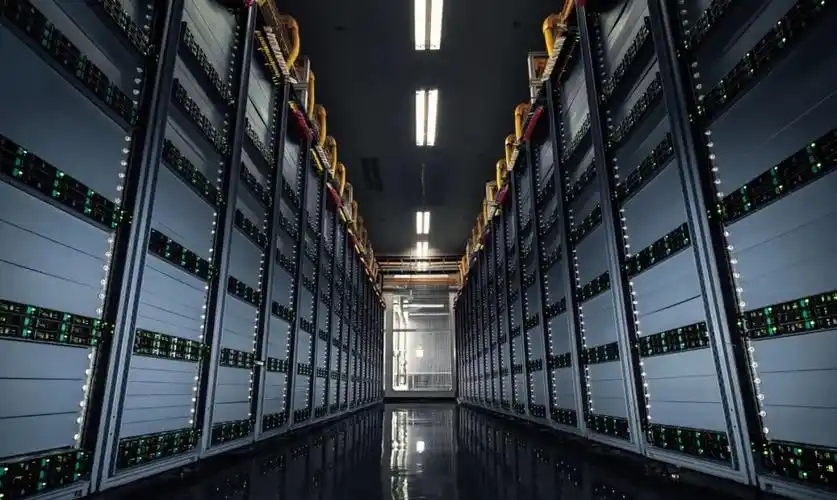
Why AI data center performance depends on networking, topology, congestion, storage and collective communication—not GPUs alone.
A practical guide to least-privilege permission design for enterprise AI agents that access tools, business data and action APIs.
Compare small and large language models for enterprise workloads across quality, latency, cost, privacy, deployment complexity and task specialization.
How AI inference autoscaling differs from conventional web scaling across GPU memory, model loading, batching, latency, utilization and capacity planning.
A practical framework for enterprise AI guardrails across permissions, data, tools, outputs, human review and measurable business risk.
A practical enterprise AI pilot checklist covering workflow fit, evaluation, security, integration, cost, adoption and production readiness.
Why GPU utilization is a critical AI infrastructure metric, and how batching, memory pressure, scheduling and workload shape real economics.
A practical enterprise framework for reducing AI vendor lock-in across models, prompts, data, embeddings, tools, evaluation and infrastructure.
How semantic, prompt and response caching can reduce AI inference cost and latency—and where freshness, privacy and personalization make caching risky.
A practical framework for building enterprise AI evaluation sets that reflect real workflows, edge cases, business risk and production quality.
A practical humanoid robot ROI framework covering task selection, labor substitution, utilization, teleoperation, safety, integration and pilot economics.
A practical guide to AI model routing: selecting different models by task, risk, latency and cost while keeping evaluation and fallback logic under control.
How to calculate AI infrastructure total cost of ownership across GPUs, cloud commitments, power, cooling, networking, utilization, staffing and reliability.
A practical enterprise RAG guide covering retrieval quality, chunking, permissions, freshness, evaluation and when retrieval-augmented generation is the wrong architecture.
Enterprise AI agents need observability across tool calls, latency, cost, permissions, failures and business outcomes—not just model accuracy.
Humanoid robots are moving from demos toward commercial pilots. This enterprise checklist covers task selection, safety, teleoperation, uptime, integration, data and total cost of ownership.
Open-weight or proprietary AI? Compare control, privacy, capability, cost, operations, licensing and vendor risk with a practical enterprise model-selection framework.
A practical AI startup due diligence framework covering revenue quality, retention, model dependency, compute economics, defensibility, data rights, security and commercialization.
AI data centers are becoming power-and-cooling engineering projects as much as compute projects. Here is how grid access, cooling, utilization and inference demand shape the next infrastructure cycle.
AI inference economics is moving beyond token pricing. A practical framework for measuring model cost, latency, utilization, reliability and business value at the workflow level.
2026 is being hailed as the “y…
Abstract: 2026 marks a critica…
Scroll through your social fee…
Everyone is talking about AI s…
On February 2nd local time, El…
In 2026, the focus of competit…
Another bombshell in the AI ci…
At the start of 2026, the comp…
No matter how bright the city …
From the capital frenzy in 202…