 admin
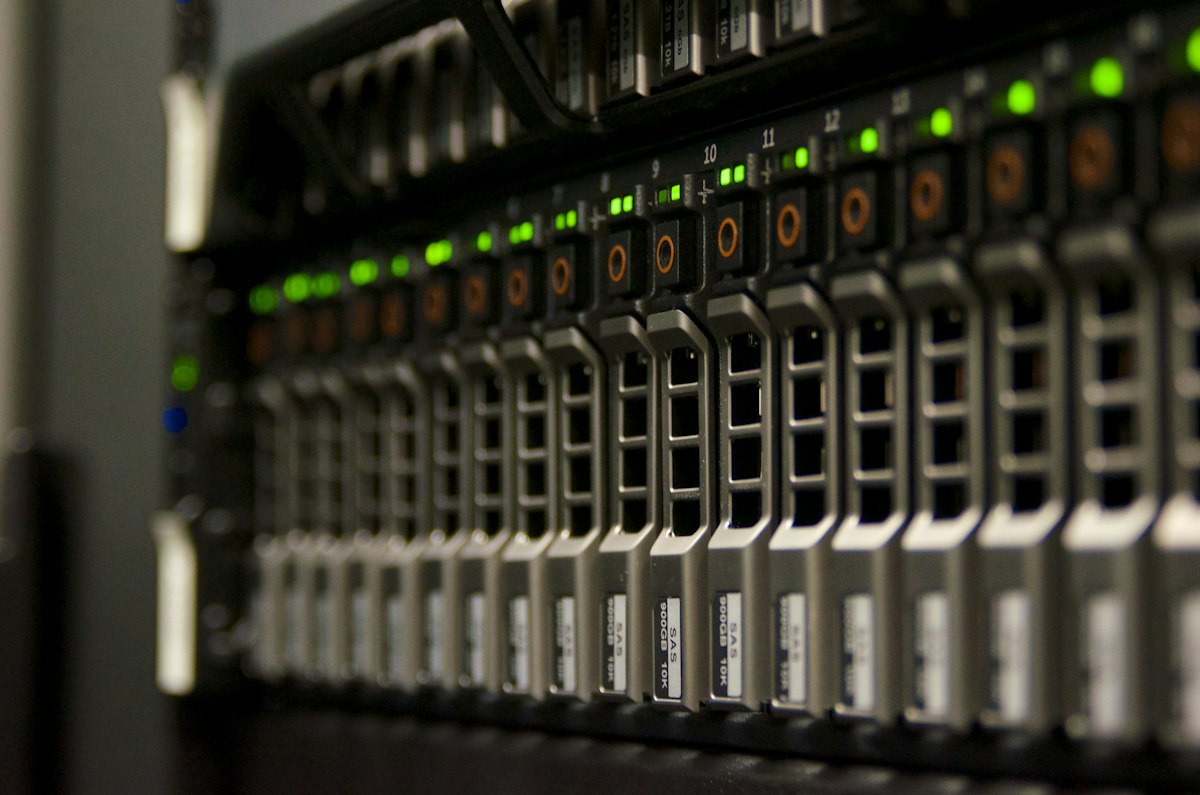
A practical framework for setting AI inference service-level objectives across latency, task quality, availability and cost instead of optimizing one metric in isolation.
Why AI needs multi-dimensional SLOs
A conventional API can often be judged by uptime and response time. AI systems add another variable: a fast answer can still be wrong, incomplete or unsafe. Production teams therefore need service objectives that combine latency, task quality, availability and unit cost. Define the user-visible outcome.
Start with the job the feature performs. A voice assistant may care about time to first audio, while a research workflow can tolerate more delay for a better answer. Define success at the workflow level before setting infrastructure targets.
Latency needs percentiles
Average latency hides slow tails. Track p50, p95 and p99, and separate queue time, model time, retrieval and tool execution. For streaming models, time to first token and total completion time should be measured independently. Quality needs repeatable evaluation.
Create representative tasks with pass criteria. Monitor regression after model, prompt or retrieval changes. Human review can calibrate automated scoring. MidyTech’s recent guide to LLM evaluation in CI/CD shows how to turn evaluation into a release gate.
Cost belongs in the SLO conversation
A system that meets latency by overprovisioning GPUs may be technically healthy but economically weak. Track cost per successful task and define budget ranges for major workloads. This makes routing and caching decisions easier to evaluate. Design error budgets.
Allow a controlled percentage of requests to miss a target rather than demanding perfection. When the error budget is consumed quickly, slow feature rollout and focus on reliability. Different workloads can have different budgets.
Review by workload
Do not blend customer support, batch summarization and real-time voice into one dashboard. Each has different tolerance for delay, quality and cost. Segment SLOs so engineering choices reflect real user expectations. Separate interactive and elastic capacity.
Real-time traffic benefits from warm, predictable capacity, while background jobs can often use preemptible or delayed resources. Keeping at least some scheduling separation prevents batch work from consuming the headroom needed for user-facing requests. The boundary does not have to be fixed. Capacity can move between pools based on demand, but the transfer policy should preserve latency targets before maximizing utilization.
Use queue signals before GPU saturation becomes visible
Queue age, pending tokens and admission delay often reveal overload earlier than raw GPU utilization. A device can appear busy but healthy, or moderately utilized while a long queue forms because request shapes are mismatched. Control loops should therefore use several signals and apply hysteresis so autoscaling or rejection policies do not oscillate during bursty traffic.
Plan for model and request heterogeneity. Different models, context lengths and generation limits consume very different amounts of memory and time. Schedulers should account for request shape instead of treating every job as one unit of work.
Model routing and batching policies can improve efficiency, but they should preserve quality and latency requirements explicitly rather than using the cheapest path by default.
Evaluate cost under realistic concurrency
Benchmarks with one request at a time do not reveal production behavior. Test burst traffic, mixed prompt lengths, long generations, model swaps and failure recovery. Cost and latency should be measured under the same concurrency pattern expected from real users. Make capacity policy explicit.
Infrastructure becomes easier to operate when the system can explain how work is prioritized. Define which requests may queue, which receive reserved capacity, which can route to alternate models and which should be rejected during overload. Explicit policy also improves multi-tenant fairness because large customers cannot accidentally consume all available headroom without a deliberate quota or scheduling decision.
Optimize the critical path, not a single component
Inference latency includes queueing, model execution, transfer, token streaming and downstream processing. A faster kernel may have little user impact if requests spend most of their time waiting for admission or model loading. End-to-end tracing should identify where tail latency originates so engineering effort follows actual bottlenecks.
Use graceful degradation before catastrophic overload
When demand exceeds capacity, delay background work, disable optional enrichment, route eligible traffic to smaller models or reject before queues become unstable. Controlled degradation protects most users and shortens recovery after a spike.
Queue age and pending tokens can reveal overload earlier than raw GPU utilization.
Model economics under realistic concurrency
Warm pools, batching and routing all trade cost for latency or quality. Measure cost per successful request by traffic class under bursty, production-like concurrency rather than relying on single-request benchmarks.
The best configuration is the one that satisfies product SLOs at sustainable cost, not simply the one with the highest utilization.






