 admin
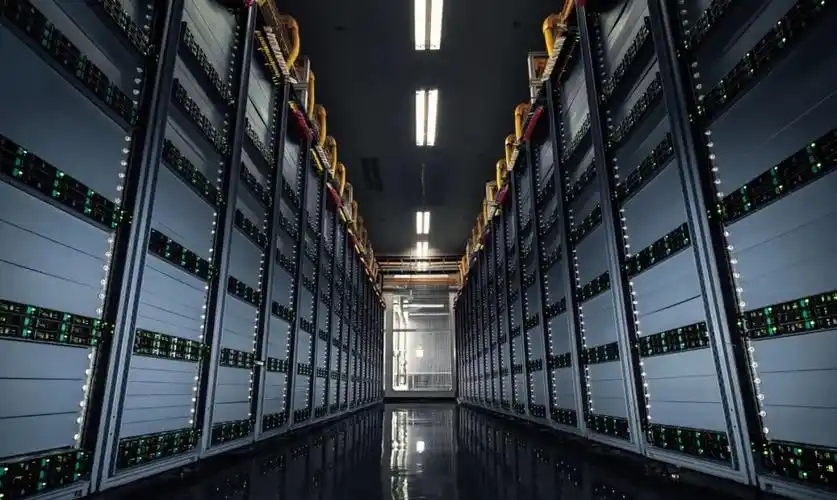
The AI infrastructure conversation often starts with GPUs. In practice, the ability to deploy those GPUs increasingly depends on less glamorous constraints: electrical capacity, grid interconnection, cooling design, networking, land, water strategy and the time required to bring a facility online.
That is why the next phase of the AI data-center buildout should be understood as a systems problem. Compute is only useful when the entire stack can deliver power reliably, remove heat efficiently and keep expensive accelerators utilized. For investors and operators, the bottleneck is shifting from “Can we buy the chips?” to “Can we operate the full facility at the required density, cost and reliability?”
AI changes the data-center design problem
Traditional enterprise data centers were built around mixed workloads with comparatively moderate rack densities. AI clusters concentrate much more compute in a smaller physical footprint. Training and inference also create different utilization patterns, networking demands and latency requirements.
MidyTech previously explored the capital flowing into this market in AI Data Centers: Unveiling the Trillion-Dollar Capital Flow. The investment thesis now needs a second layer: not all megawatts are equally valuable. Location, energization date, network connectivity, cooling architecture and customer workload determine whether nominal capacity can become productive AI capacity.
Grid access is becoming a strategic asset
A proposed data center may have land and financing but still face a long path to power. Large facilities require utility coordination, substations, transmission capacity and sometimes new generation or storage arrangements. The timing mismatch matters because AI hardware cycles move faster than major electrical infrastructure projects.
For operators, this creates three questions. First, when is power contractually available rather than merely planned? Second, how firm is that capacity during peak demand? Third, what is the all-in electricity cost after transmission, demand charges and backup requirements?
Recent AI infrastructure projects illustrate how power availability and energy strategy are becoming part of site selection. Reuters reported in September 2026 that Anthropic signed an agreement for a large Australian data-center campus intended for inference, highlighting the geographic expansion of AI infrastructure and the importance of energy and regulatory conditions.
Cooling is moving closer to the chip
As rack density rises, cooling design becomes a first-order constraint. Air cooling remains viable for many environments, but high-density accelerator clusters increasingly push operators toward liquid-assisted approaches. The engineering choice depends on hardware, density, climate, water strategy, retrofit constraints and maintenance capability.
The important business point is that cooling cannot be evaluated separately from compute. A design that supports more dense racks can improve use of floor space, but it may require new plumbing, heat-exchange equipment and operational expertise. Retrofitting an older facility may be technically possible yet economically unattractive compared with building a new AI-ready site.
Power efficiency is necessary but not sufficient
Power Usage Effectiveness remains useful for understanding facility overhead, but AI operators need a broader view. A highly efficient facility can still waste capital if expensive GPUs are underutilized. Conversely, pushing utilization aggressively can create thermal or reliability problems.
The better operating question is: how much useful AI work is produced per unit of total facility cost? That includes power, cooling, networking, hardware depreciation and downtime. This is closely related to the emerging industrialization of large language models, where production economics matter as much as benchmark capability.
Inference changes where capacity should live
Training clusters can often be located where large blocks of power are available, because the workload is less sensitive to end-user latency. Inference is more complicated. Interactive applications may need regional capacity closer to users, while batch inference can tolerate greater distance. Data-residency rules can also influence where requests are processed.
This creates a more distributed infrastructure map. A company may use centralized high-density capacity for training and large batch jobs while serving latency-sensitive inference from regional facilities or cloud zones. The right architecture depends on workload shape rather than a single global rule.
Networking is the hidden multiplier
Large AI clusters depend on fast communication among accelerators and between compute and storage. Network architecture affects how efficiently expensive hardware can be used. Congestion, poor topology or storage bottlenecks can leave GPUs waiting even when the facility has abundant power.
For buyers evaluating AI infrastructure, “GPU count” is therefore an incomplete metric. They should ask about usable cluster size, interconnect architecture, storage throughput, failure domains, scheduling software and observed utilization under representative workloads.
What investors should examine
AI data-center investment increasingly resembles a combination of technology underwriting, energy underwriting and real-estate execution. A disciplined review should separate announced capacity from energized capacity and contracted capacity from speculative pipeline.
1. Time to power
When can the site actually energize each phase? What utility milestones remain? Delays can materially change the economics because hardware generations and customer requirements evolve quickly.
2. Customer quality
Is demand backed by credible contracts? How concentrated is the tenant base? What happens if a major AI customer changes its infrastructure strategy?
3. Hardware refresh risk
AI accelerators have rapid product cycles. Facilities should be designed to support future power density, cooling and networking requirements rather than only today’s hardware.
4. Energy exposure
Power price, availability and carbon requirements can affect customer demand and operating margin. Backup generation and storage may add resilience but also capital cost.
5. Retrofit flexibility
A facility that can adapt to new cooling or rack-density requirements may have a longer useful life than one optimized narrowly for a single generation of hardware.
The infrastructure stack is converging
The AI data center is becoming an integrated product made of energy, real estate, chips, networking, cooling and software. Companies that optimize only one layer risk moving the bottleneck somewhere else. Buying more GPUs does not help if the grid connection is late. More power does not help if cooling limits rack density. More racks do not help if networking keeps accelerators idle.
That systems view also changes competitive advantage. Access to power, engineering talent, supply chains and reliable operations can be as strategic as access to models. As AI shifts from experimentation to persistent production workloads, infrastructure quality will increasingly show up directly in latency, availability and product margin.
Sources and further reading
Reuters: Anthropic signs Australia data-centre agreement
Uptime Institute: AI inference deployment economics






