Alice
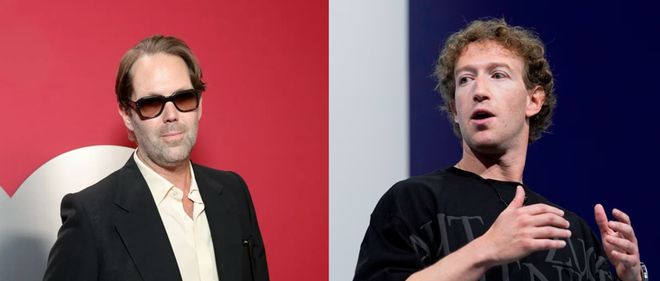
On December 4, news broke that Meta CEO Mark Zuckerberg announced on the social platform Threads that Alan Dye, Apple’s vice president of Human Interface Design and head of User Interface Design, will be joining Meta. Zuckerberg stated, “We’re forming a new design studio led by Dye, and we’re treating intelligence as a new design material.” In July, Meta lured away Ruoming Pang, a distinguished engineer and manager from Apple’s foundational AI model team, offering him tens of millions of dollars in compensation, which subsequently caused upheaval within Apple’s internal AI team. Meanwhile, Meta has also recruited a large number of top AI talents from other companies such as OpenAI, Google, and Anthropic.
Now, Meta has once again set its sights on Apple’s design team, marking yet another significant talent loss for Apple and dealing another blow to its design division. As Zuckerberg’s announcement indicates, this recruitment is aimed at the field of AI-powered consumer hardware. Since the departure of Jony Ive, Apple’s legendary former chief designer, in 2019, the company’s design team has shown signs of ongoing talent attrition.
Earlier this year, Jeff Williams, Apple’s long-time chief operating officer who had been overseeing the design team in recent years, stepped down in July. Following his departure, the design team now reports directly to CEO Tim Cook. In November, Abidur Chowdhury, the designer responsible for the iPhone Air, also announced his resignation. Beyond the design team, Apple’s core executive leadership continues to experience ongoing personnel changes.
On November 15, the UK’s Financial Times reported that Apple CEO Tim Cook might step down as early as January next year. Although this report was later debunked by well-known Apple insider Mark Gurman, Gurman did not deny the possibility that John Ternus, Apple’s senior vice president of Hardware Engineering, could succeed Cook — meaning Apple might soon be run by an executive from the hardware division. Additionally, John Giannandrea, Apple’s head of AI, also announced his resignation earlier this week. Conclusion: Meta Bets Big on AI Race as Apple’s Design Team Suffers Another Loss
The battle for AI talent in Silicon Valley is intensifying, and this latest personnel move is another reflection of Meta’s full commitment to AI hardware and superintelligence. Cook stated, “Design is at the core of Apple’s competitiveness. We have an exceptional design team that is dedicated to developing the most innovative product lineup in Apple’s history.” Apple is set to release a new version of the Siri voice assistant, the next-generation iPhone Air, and a foldable iPhone, among other new products. The continuous loss of key team members casts increasing uncertainty over the company’s future R&D efforts.
Define the production contract
Agree on expected quality, latency, cost and failure behavior before optimizing components. A service can look efficient in isolation while violating the user-facing objective.
Fallback and rejection behavior should be explicit so edge cases do not improvise at runtime.
Make state ownership explicit
Models, caches, queues and databases often hold overlapping representations. Each durable state should have one authoritative owner and a version so stale copies cannot silently win.
Test degradation and recovery
Simulate unavailable dependencies, stale caches and overload. A production system needs predictable fallbacks and a clear path back to normal operation rather than manual repair for every incident.
Instrument the end-to-end path
Measure queueing, execution, retries and final user outcome rather than only component health. Traces should make it possible to explain why a request was slow or wrong from the user’s perspective.
Version important configuration
Prompt templates, model routes and data dependencies can change behavior without code changes. Versioning these inputs makes regressions reproducible and rollback safer.
Prefer bounded failure
When dependencies degrade, reduce optional work or return a clear fallback instead of allowing latency and error rates to cascade through the whole system.
Define the production contract
Agree on expected quality, latency, cost and failure behavior before optimizing components. A service can look efficient in isolation while violating the user-facing objective.
Fallback and rejection behavior should be explicit so edge cases do not improvise at runtime.
Make state ownership explicit
Models, caches, queues and databases often hold overlapping representations. Each durable state should have one authoritative owner and a version so stale copies cannot silently win.
Test degradation and recovery
Simulate unavailable dependencies, stale caches and overload. A production system needs predictable fallbacks and a clear path back to normal operation rather than manual repair for every incident.


 admin