Alice
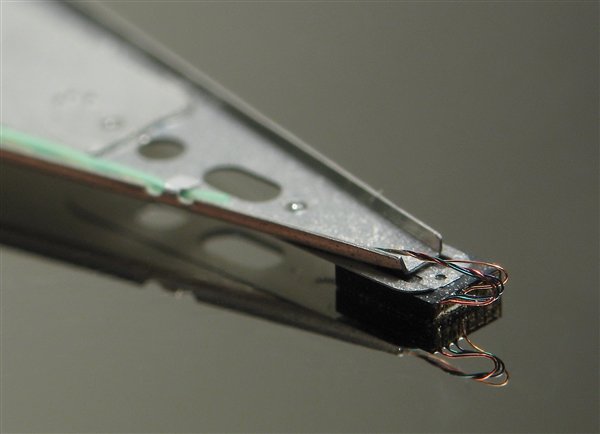
Recently, prices of multiple components in the PC industry have surged significantly. In addition to memory modules and solid-state drives (SSDs), the prices of hard disk drives (HDDs) have also skyrocketed. This round of price increases is mainly driven by AI demand. AI data centers have extremely high requirements for large-capacity storage, and HDDs remain indispensable. As a result, Seagate and Western Digital —the two major leading suppliers of HDDs—have seen explosive growth in their performance, which has in turn led to a sharp surge in their stock prices. Since the start of the year, their stock prices have risen by over 200%. Dave Mosley, CEO of Seagate, stated that the company’s production capacity for ultra-large-capacity hard drives targeting the cloud market has been completely sold out for 2026, and there is even clear visibility regarding the production capacity for 2027. Despite the current shortage of supply and rising prices, manufacturers have no plans to expand production capacity; instead, they are enjoying the current period of soaring profits. When asked whether the company would increase production capacity due to the significant surge in demand, Dave Mosley responded that Seagate is focusing on increasing hard drive density to meet demand. The company is launching new hard drives equipped with HAMR (Heat-Assisted Magnetic Recording) technology, which can significantly increase storage capacity.
Define end-to-end expectations
Quality, latency, cost and failure behavior should be explicit before teams optimize components. Local improvements are useful only when they support the user-facing contract. Make state ownership clear.
Caches, databases and model context can hold overlapping information. Give each durable fact an authoritative owner and version.
Exercise recovery routinely
Simulate unavailable dependencies and stale state so fallbacks and restoration are tested before an incident. Define end-to-end expectations.
Quality, latency, cost and failure behavior should be explicit before teams optimize components. Local improvements are useful only when they support the user-facing contract.
Make state ownership clear
Caches, databases and model context can hold overlapping information. Give each durable fact an authoritative owner and version. Exercise recovery routinely.
Simulate unavailable dependencies and stale state so fallbacks and restoration are tested before an incident.
Define end-to-end expectations
Quality, latency, cost and failure behavior should be explicit before teams optimize components. Local improvements are useful only when they support the user-facing contract. Make state ownership clear.
Caches, databases and model context can hold overlapping information. Give each durable fact an authoritative owner and version.
Exercise recovery routinely
Simulate unavailable dependencies and stale state so fallbacks and restoration are tested before an incident. Instrument the end-to-end path.
Measure queueing, execution, retries and final user-visible outcome rather than only subsystem health. Traces should make it possible to explain why a request was slow or wrong from the user’s perspective. Practice degradation and recovery so unavailable dependencies or stale caches trigger predictable fallbacks instead of cascading failure.
Define the production contract first
Quality, latency, cost and failure behavior should be explicit before teams optimize individual components. A subsystem can look healthy while violating the end-to-end objective users actually experience. Fallback and rejection behavior should also be planned so unusual conditions do not improvise at runtime.
Make state ownership and versioning clear. Models, queues, caches and databases often hold overlapping representations. Each durable fact should have one authoritative owner and version so stale copies cannot silently win.
Practical implementation check
Before applying this idea broadly, define a production baseline, the expected improvement and the failure conditions that would trigger rollback. Test with realistic traffic or representative workloads instead of relying on one isolated demo. Document ownership, monitoring and the assumptions that may become stale. This makes later changes easier to evaluate and prevents a one-time optimization from becoming an unexamined permanent dependency.
Performance should be evaluated against a user-facing service objective. Interactive workloads care about tail latency and predictable availability, while background jobs can trade time for throughput. Explicit priorities help schedulers protect the traffic that users are waiting on.
Queue time, model loading, memory pressure and transfer should be measured alongside raw compute so optimization follows the real critical path.
Overload behavior needs a deliberate fallback
Delay lower-priority work, route eligible traffic to alternate models or reject early before queues become unstable. Controlled degradation protects the majority of users and shortens recovery after a spike.


 admin