Alice
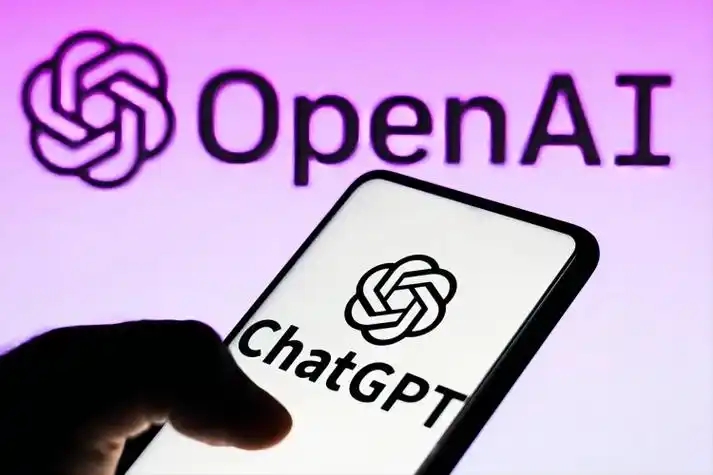
San Francisco, CA – OpenAI announced today that the highly anticipated group chat feature for ChatGPT has been officially launched globally, marking a significant milestone in enhancing collaborative AI interactions for users worldwide. The new functionality is now accessible to all logged-in ChatGPT users, spanning the entire spectrum of subscription plans including Free, Go, Plus, and Pro tiers, ensuring broad accessibility across user segments. Prior to this global rollout, the ChatGPT group chat feature underwent a rigorous pilot phase with early testers, during which OpenAI gathered valuable feedback to refine performance, optimize user experience, and address potential technical considerations. The successful completion of the pilot program laid a solid foundation for the full-scale launch, enabling the company to deliver a polished and reliable feature that meets the diverse needs of its global user base. “Today’s global release of ChatGPT’s group chat feature represents our commitment to fostering more connected and collaborative AI experiences,” said a spokesperson for OpenAI. “By making this functionality available to all users, regardless of their subscription plan, we aim to empower individuals, teams, and communities to leverage ChatGPT’s capabilities in collective settings—whether for brainstorming, problem-solving, learning, or casual collaboration. The insights gained from our early testers were instrumental in shaping this feature, and we’re excited to see how users around the world will integrate it into their daily interactions.” The group chat feature allows multiple users to engage with ChatGPT simultaneously within a shared conversation space, enabling real-time collaborative interactions with the AI model. This capability is expected to unlock new use cases across various scenarios, including team projects, educational study groups, family discussions, and professional collaborations, where collective input and AI-assisted insights can drive more efficient and creative outcomes.
Since its initial introduction, ChatGPT has continued to evolve with regular feature updates and enhancements, solidifying its position as a leading AI-powered conversational tool. The global launch of the group chat feature further expands its utility, reinforcing OpenAI’s dedication to innovating and delivering user-centric solutions that push the boundaries of AI accessibility and functionality. Users can access the group chat feature immediately upon logging into their ChatGPT accounts, with no additional setup required. OpenAI encourages users to share feedback on the feature through its official channels to support ongoing improvements and refinements.
Define the production contract
Agree on expected quality, latency, cost and failure behavior before optimizing components. A service can look efficient in isolation while violating the user-facing objective. Fallback and rejection behavior should be explicit so edge cases do not improvise at runtime.
Make state ownership explicit. Models, caches, queues and databases often hold overlapping representations. Each durable state should have one authoritative owner and a version so stale copies cannot silently win.
Test degradation and recovery
Simulate unavailable dependencies, stale caches and overload. A production system needs predictable fallbacks and a clear path back to normal operation rather than manual repair for every incident. Instrument the end-to-end path.
Measure queueing, execution, retries and final user outcome rather than only component health. Traces should make it possible to explain why a request was slow or wrong from the user’s perspective.
Version important configuration
Prompt templates, model routes and data dependencies can change behavior without code changes. Versioning these inputs makes regressions reproducible and rollback safer. Prefer bounded failure.
When dependencies degrade, reduce optional work or return a clear fallback instead of allowing latency and error rates to cascade through the whole system.
Define the production contract
Agree on expected quality, latency, cost and failure behavior before optimizing components. A service can look efficient in isolation while violating the user-facing objective. Fallback and rejection behavior should be explicit so edge cases do not improvise at runtime.
Make state ownership explicit. Models, caches, queues and databases often hold overlapping representations. Each durable state should have one authoritative owner and a version so stale copies cannot silently win.
Test degradation and recovery
Simulate unavailable dependencies, stale caches and overload. A production system needs predictable fallbacks and a clear path back to normal operation rather than manual repair for every incident. How to read the development beyond the headline.
The reported development is most useful when separated into confirmed facts, forecasts and interpretation. Product timelines, pricing, supply constraints, regulation and customer adoption can all determine whether an early headline becomes a durable shift. Readers should update the thesis as concrete follow-through appears instead of treating an initial announcement or market reaction as the final outcome.
What to watch next
Useful signals include shipped products, independently observed performance, customer commitments, pricing changes, financial guidance and regulatory decisions. Those indicators show whether the development is changing real operations rather than only sentiment.


 admin