Alice
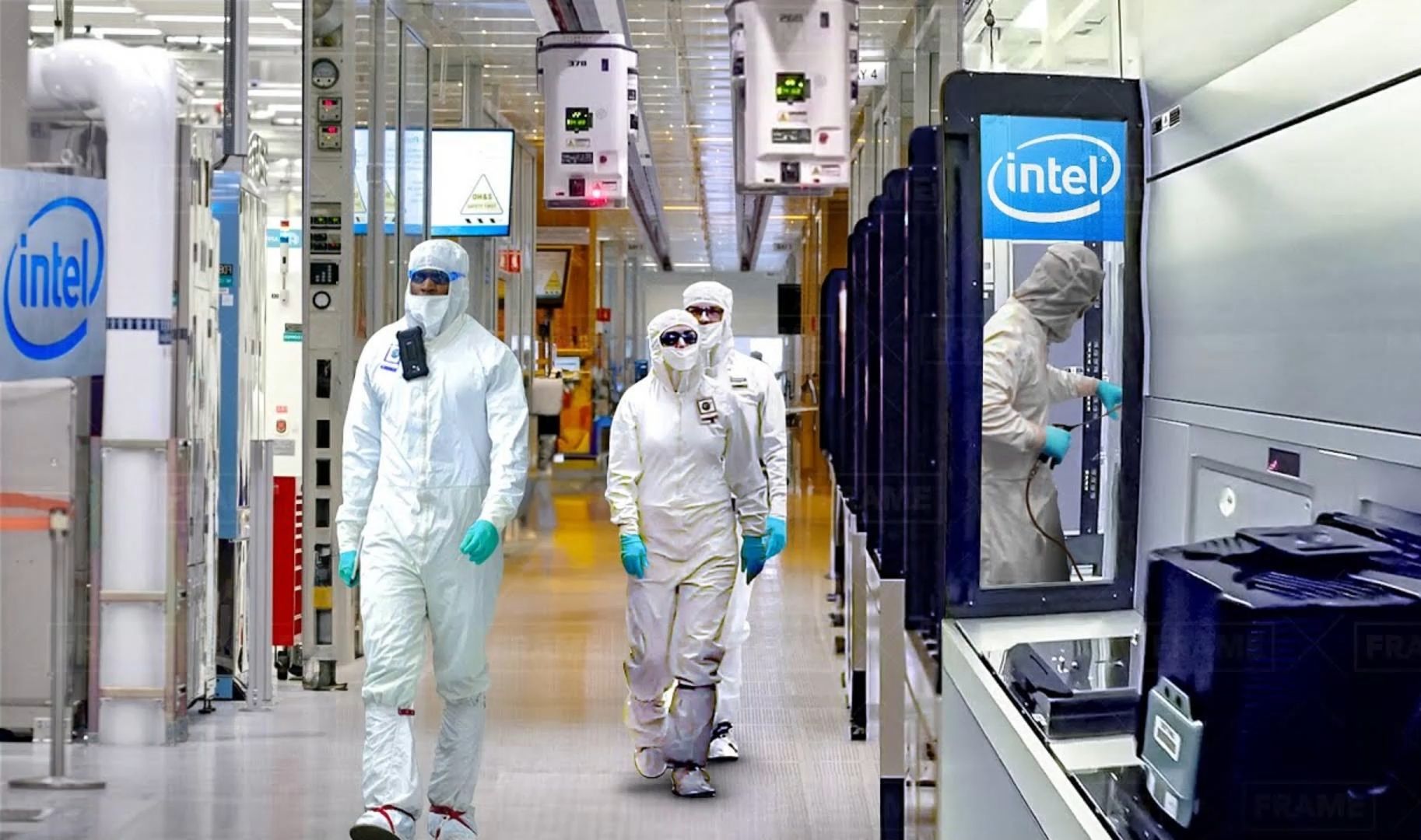
Over the past few years, Intel has been striving to enhance the competitiveness of its foundry business, but with limited success. So far, it has yet to secure large-scale, stable external orders and has remained in the red for an extended period. While Intel lags significantly behind TSMC in logic chip manufacturing, advanced packaging technology appears to be a more promising area for breakthrough.
According to Wccftech, the industry’s demand for powerful computing solutions is growing faster than what Moore’s Law alone can deliver. As a result, many chip design firms have turned to advanced packaging technologies — essentially integrating multiple smaller chips (chiplets) within a single package to increase chip density and overall platform performance. This has made advanced packaging an indispensable part of the supply chain. For years, TSMC, the world’s largest contract chipmaker, has dominated this field. However, recent developments suggest that this landscape might be shifting.
Both Apple and Qualcomm have recently posted job listings that indicate they are seeking professionals with expertise in Intel’s EMIB (Embedded Multi-Die Interconnect Bridge) advanced packaging technology. Apple is looking for a DRAM packaging engineer, while Qualcomm is hiring a product management director for its data center business unit.
EMIB, introduced by Intel in 2017, was the industry’s first 2.5D embedded bridge solution. It uses small embedded silicon bridges to connect multiple chiplets within a single package, eliminating the need for large interposers. Building on EMIB, Intel has also developed Foveros Direct, a 3D packaging technology that enables stacking of chips through Through-Silicon Vias (TSVs) on a base die.
Currently, TSMC’s advanced packaging capacity is facing supply bottlenecks due to high demand from major clients like NVIDIA. The company is struggling to expand production quickly enough to meet market needs, resulting in lower priority for some newer customers who may need to explore alternative options.
While these job postings do not necessarily mean that Apple or Qualcomm will place orders with Intel anytime soon, they do signal growing industry interest in Intel’s advanced packaging solutions. This suggests that there may be potential customers open to exploring alternatives beyond TSMC, especially as demand continues to outpace supply in the advanced packaging space.
Define the production contract first
Agree on expected quality, latency, cost and failure behavior before optimizing individual components. A subsystem can look healthy while violating the end-to-end user objective. Make state ownership explicit.
Models, queues, caches and databases often hold overlapping representations. Each durable state should have one authoritative owner and a version so stale copies cannot silently win.
Test degradation and recovery
Simulate unavailable dependencies, stale caches and overload. Production systems need predictable fallbacks and a clear path back to normal operation rather than manual repair for every incident. Define the production contract first.
Agree on expected quality, latency, cost and failure behavior before optimizing individual components. A subsystem can look healthy while violating the end-to-end user objective.
Make state ownership explicit
Models, queues, caches and databases often hold overlapping representations. Each durable state should have one authoritative owner and a version so stale copies cannot silently win. Test degradation and recovery.
Simulate unavailable dependencies, stale caches and overload. Production systems need predictable fallbacks and a clear path back to normal operation rather than manual repair for every incident.
Define the production contract first
Agree on expected quality, latency, cost and failure behavior before optimizing individual components. A subsystem can look healthy while violating the end-to-end user objective. Make state ownership explicit.
Models, queues, caches and databases often hold overlapping representations. Each durable state should have one authoritative owner and a version so stale copies cannot silently win.
Test degradation and recovery
Simulate unavailable dependencies, stale caches and overload. Production systems need predictable fallbacks and a clear path back to normal operation rather than manual repair for every incident. Second-order effects can matter more than the announcement.
Technology moves often affect suppliers, competitors, developers and customers as much as the company named in the headline. The practical question is whether the event changes cost, capacity, standards, distribution or strategic options. Long-term scenarios should be evaluated against near-term milestones so ambitious forecasts remain clearly separated from confirmed execution.
How to read the development beyond the headline
The reported development is most useful when separated into confirmed facts, forecasts and interpretation. Product timelines, pricing, supply constraints, regulation and customer adoption can all determine whether an early headline becomes a durable shift. Readers should update the thesis as concrete follow-through appears instead of treating an initial announcement or market reaction as the final outcome.
What to watch next. Useful signals include shipped products, independently observed performance, customer commitments, pricing changes, financial guidance and regulatory decisions. Those indicators show whether the development is changing real operations rather than only sentiment.


 admin