Alice
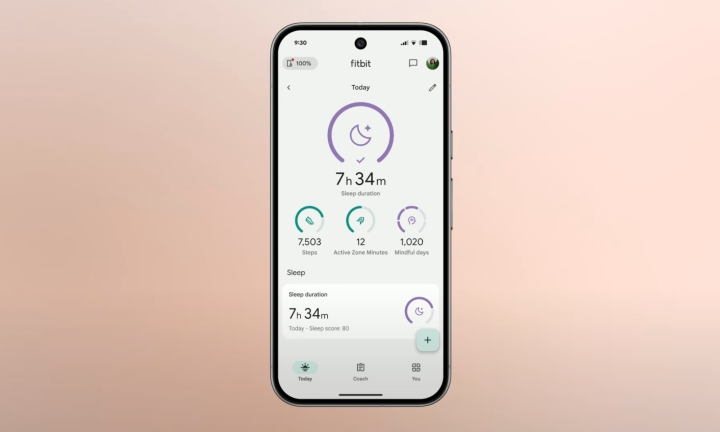
Fitbit Premium users are getting a game-changing, AI-powered fitness coach that transforms the app into a conversational fitness companion.
- Fitbit is rolling out a new AI-driven personal coach app for Premium subscribers in the United States (via blog post).
- Although still under development, the upgrade brings Gemini AI integration directly into the Fitbit app, enabling conversational health coaching.
- It lets users interact with an assistant that’s aware of their fitness data and provides personalized advice, goal-setting support, and tailored suggestions to improve activity, sleep, and overall wellness.
Alongside the new conversational AI personal coach, Fitbit Premium users also receive a major app redesign. The new Today tab displays key health metrics and instant feedback from the AI-powered coach in one place.
- This update enhances the real-world functionality of Fitbit’s health platform, shifting it from static tracking toward dynamic, personalized guidance.
- For Fitbit and Google, the update marks an ambitious step toward next-generation health apps, leveraging conversational AI to boost engagement, retention, and differentiation amid fierce competition.
Instead of manually interpreting stats, you can now benefit from real-time recommendations and direct answers to your health and wellness questions.
- For example, you can ask Gemini AI to help you set nuanced objectives, such as running without getting out of breath, and the assistant will break down the goal into actionable steps.
- This hands-on guidance helps you turn your fitness data into real progress, saving time and reducing confusion with its interactive interface.
- Since the feature is currently in public preview, Google is actively collecting user feedback. The rollout will eventually expand to iOS users and broader international markets in the near future.
Operate against explicit service contracts
Quality, latency, cost and failure behavior should be defined before optimization begins. This keeps local improvements from degrading the user-visible system. Version configuration and state.
Prompts, model routes, caches and data dependencies can change behavior without application code changes. Versioning makes regressions reproducible and rollback practical.
Prefer graceful degradation
When a dependency fails or capacity tightens, reduce optional work or use a clear fallback instead of allowing latency and errors to cascade through the full request path. Operate against explicit service contracts.
Quality, latency, cost and failure behavior should be defined before optimization begins. This keeps local improvements from degrading the user-visible system.
Version configuration and state
Prompts, model routes, caches and data dependencies can change behavior without application code changes. Versioning makes regressions reproducible and rollback practical. Prefer graceful degradation.
When a dependency fails or capacity tightens, reduce optional work or use a clear fallback instead of allowing latency and errors to cascade through the full request path.
Operate against explicit service contracts
Quality, latency, cost and failure behavior should be defined before optimization begins. This keeps local improvements from degrading the user-visible system. Version configuration and state.
Prompts, model routes, caches and data dependencies can change behavior without application code changes. Versioning makes regressions reproducible and rollback practical.
Prefer graceful degradation
When a dependency fails or capacity tightens, reduce optional work or use a clear fallback instead of allowing latency and errors to cascade through the full request path. Instrument the end-to-end path.
Measure queueing, execution, retries and final user-visible outcome rather than only subsystem health. Traces should make it possible to explain why a request was slow or wrong from the user’s perspective. Practice degradation and recovery so unavailable dependencies or stale caches trigger predictable fallbacks instead of cascading failure.
Define the production contract first
Quality, latency, cost and failure behavior should be explicit before teams optimize individual components. A subsystem can look healthy while violating the end-to-end objective users actually experience. Fallback and rejection behavior should also be planned so unusual conditions do not improvise at runtime.
Make state ownership and versioning clear. Models, queues, caches and databases often hold overlapping representations. Each durable fact should have one authoritative owner and version so stale copies cannot silently win.
Practical implementation check
Before applying this idea broadly, define a production baseline, the expected improvement and the failure conditions that would trigger rollback. Test with realistic traffic or representative workloads instead of relying on one isolated demo. Document ownership, monitoring and the assumptions that may become stale. This makes later changes easier to evaluate and prevents a one-time optimization from becoming an unexamined permanent dependency.


 admin