admin
Nvidia announced on November 23, 2026, that Jensen Huang was returning as president, CEO and a director. For people building AI products, the biggest question is not whether the market likes the announcement. It is whether a company that supplies much of the industry’s computing infrastructure can continue delivering predictable capacity, software support and a credible roadmap while its governance changes. The answer matters to a two-person AI startup just as much as to a large cloud customer.
What actually changed at Nvidia?
The company’s November 23 announcement confirms Huang’s return. Its Form 8-K filed with the US Securities and Exchange Commission records the board decision on November 22 and confirms that Colette Kress continues as chief financial officer. The earlier November 12 announcement had named Kress interim CEO after Huang resigned. Nvidia also says its independent investigation will continue and describes new oversight arrangements for national security and export compliance. These are company disclosures, not findings that resolve every outstanding question.
Reuters and the Financial Times reported a sharp market rebound following the announcement. That establishes the event’s prominence, but a rise in a share price does not itself change the technical performance of a GPU, increase a cloud region’s available capacity or guarantee a lower bill next month. Developers should separate governance news from changes that can be measured in production.
Why the software ecosystem matters more than one chip
Consider what an AI team actually buys when it rents a GPU. The visible purchase is computing time, but the team also depends on a driver, runtime, numerical libraries, a model server, monitoring tools and a collection of deployment practices. If the team has optimized its inference stack for a particular accelerator, switching hardware may introduce more work than a simple price comparison suggests.
This is why continuity in Nvidia’s software investment matters. A developer choosing a model server this week should not assume that a leadership announcement changes compatibility. Instead, identify the versions currently used, whether upgrades are supported, and which parts of the application require vendor-specific features. Preserve a reproducible environment rather than rebuilding it every time the news changes. A short compatibility document is especially useful when a team has to bring up replacement capacity during a busy launch.
Will AI computing get cheaper?
It is tempting to connect positive industry news with cheap computing, but there are several independent factors. Cloud providers purchase and operate infrastructure under their own commercial arrangements. A particular model may need more memory than expected, and an apparently inexpensive accelerator may serve fewer concurrent requests. Demand can also rise faster than capacity.
Here is an illustrative calculation, not a current provider quote. Suppose a service rents an accelerator for $4 an hour and produces 800 useful responses in that hour. Direct accelerator cost is $0.005 per response. A second option costs $6 an hour but serves 1,600 useful responses, giving $0.00375 per response. Even before storage, networking and staff costs, the higher hourly price is the cheaper option on a useful-response basis. If half of those responses are rejected by quality checks, however, the second option’s apparent advantage can disappear.
The point is to buy an outcome, not a hardware label. Compare complete answers that meet your quality and latency targets. Report the assumptions and keep separate numbers for short chat messages, long-document analysis and image or video generation. They do not have the same workload characteristics.
Three practical choices for teams buying GPU time
First, maintain a working deployment on the accelerator that already meets your service targets. Unnecessary migrations consume engineering time and may introduce regressions. Second, reserve only the capacity supported by credible usage forecasts. A reserved commitment makes sense for a steady workload but can become an expensive obligation if usage changes. Third, validate an alternative provider or accelerator on a small, representative workload before you need it.
A useful comparison includes model accuracy, median and tail response times, total failed requests, throughput under a realistic traffic burst, and the time needed to recover from an outage. A team should also check data location and its contractual ability to use a particular region. A technically available endpoint is not necessarily an authorized one. Keep a separate compliance review for sensitive workloads and cross-border deployments.
How to avoid a costly bet on the wrong hardware
Imagine a startup planning an AI video feature. One supplier offers a compelling demonstration, and the team is tempted to commit its entire budget. A better approach is to use a sample of consenting or synthetic content and compare results from two available deployments. Set a fixed evaluation budget, run the same inputs and record every failure. Review the clips without telling evaluators which hardware produced them. Measure the cost of generating a clip that a user would actually accept, rather than the cost of an attempt.
Document any work needed to switch, including conversion of model weights, differences in numeric precision and changes in queue capacity. Put a spending cap on the experiment. If neither option satisfies the product requirement, keep the existing service and defer the expensive migration. This simple decision rule is more useful than predicting the next vendor announcement.
What to watch after Huang’s return
Watch published hardware delivery schedules, supported software releases, cloud availability and concrete contract terms. Track official disclosures about compliance and governance separately. Nvidia’s statement says investigations will continue; neither developers nor customers should interpret the reinstatement as a final resolution.
For the next purchasing cycle, prepare a one-page dependency map, an actual cost per useful task and a tested fallback. The headline is about Nvidia’s CEO. The engineering opportunity is to reduce the number of business decisions that depend on any single vendor’s headline. A team with measured workloads and a credible backup has more negotiating leverage whether the next news cycle is positive or negative.
Sources
- Nvidia, board announcement, November 23, 2026.
- Nvidia Form 8-K, filed November 23, 2026.
- Nvidia, CEO transition, November 12, 2026.
- Reuters, November 23, 2026.
- Financial Times, market coverage, November 23, 2026.
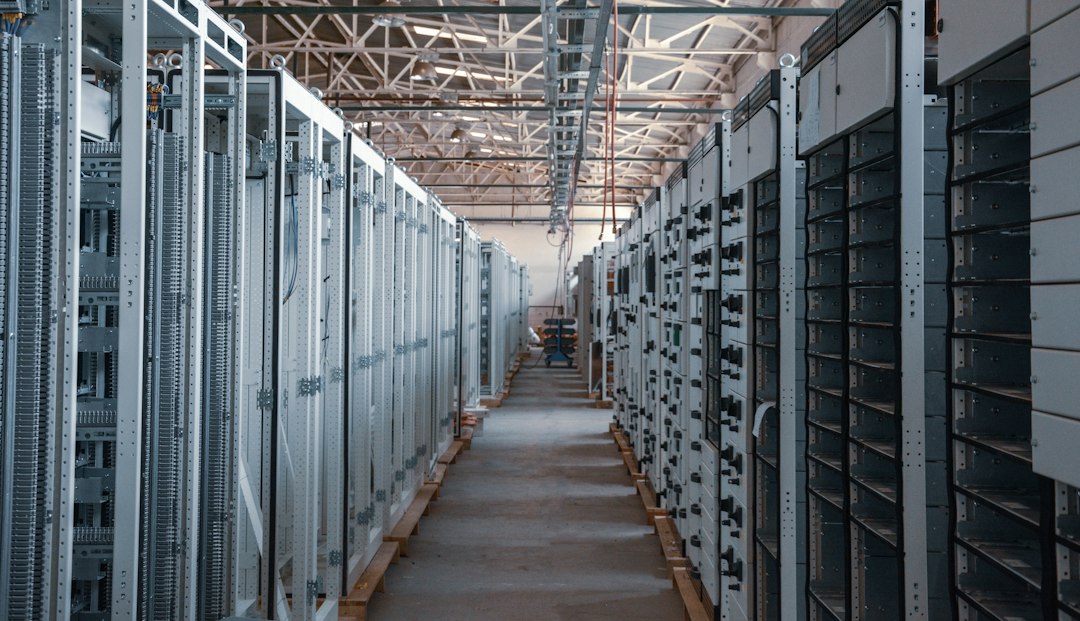
Cover: İsmail Enes Ayhan / Unsplash, illustrative image of industrial electrical infrastructure, not an Nvidia facility.