Alice
Alice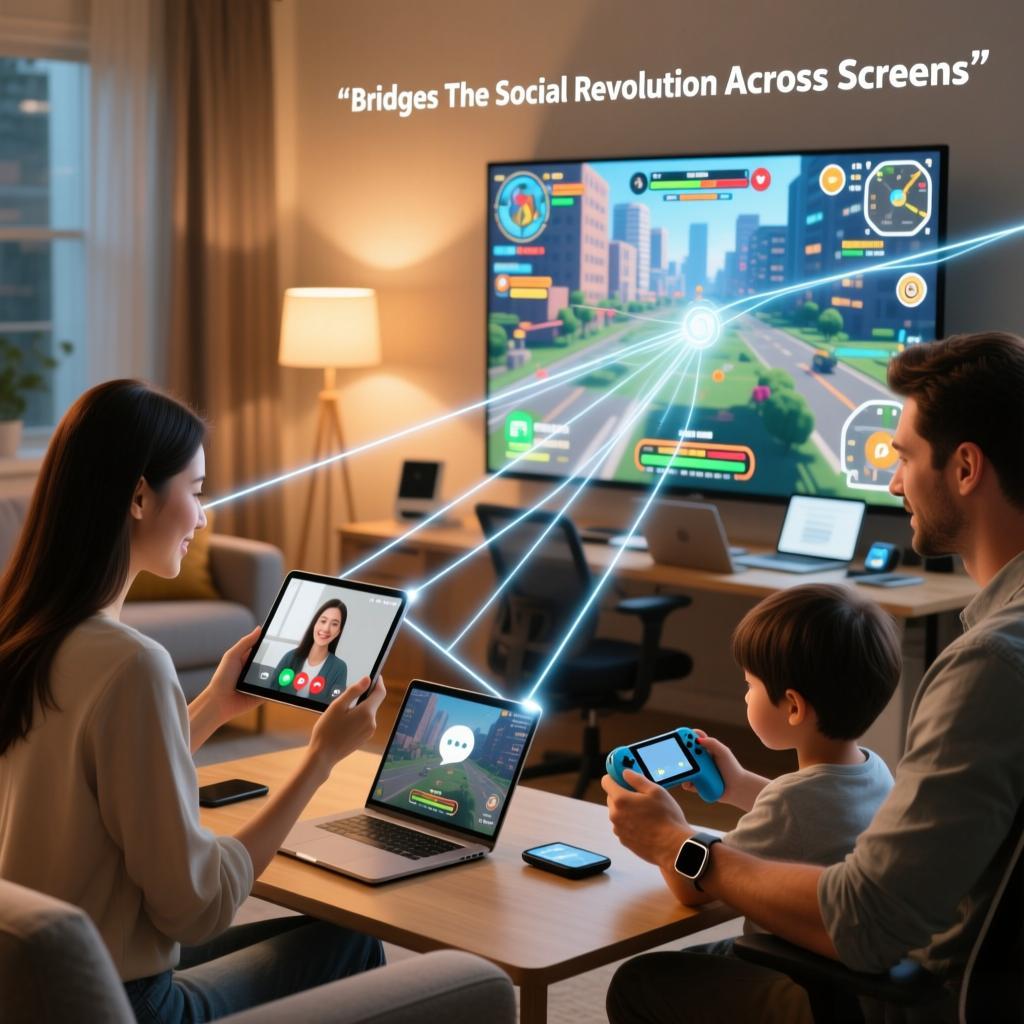
Late at night in Berlin, a desk lamp glows in a riverside office window. The blue light of a screen illuminates a world map covered in annotations—Tokyo, São Paulo, Cairo, Stockholm—each city marked with distinct patterns of user behavior. This is an ordinary night in the AI social industry, where countless data streams are reweaving the fabric of human connection.
The Silent Cultural Interpreter
On a rainy afternoon in Jakarta, a university student practices English conversation with her AI social companion. This virtual partner not only corrects her pronunciation but also seamlessly weaves in local proverbs as encouragement. Three thousand kilometers away in Cairo, a retired teacher is reciting childhood poems to an AI, turning digital memory into a new vessel for cultural heritage.
Behind these seemingly simple interactions lies a complex matrix of localized algorithms. The same AI social platform might naturally discuss football and coffee in Northern Italy, while in Seoul, the conversation shifts to K-pop and late-night study groups. This cultural adaptability is not mere keyword substitution but context generation through deep learning—the AI has mastered the unique “Hinglish” blend of Hindi and English used by Mumbai’s youth, and it understands the subtle emotional expressions typical of Stockholm residents.
A recent white paper from a Nordic team revealed a telling detail: their AI was trained to recognize “unspoken needs.” When users in Helsinki repeatedly mentioned “the lonely polar night,” the AI wouldn’t directly suggest social activities but would gently guide them toward local winter book clubs. “It’s about rhythm,” the lead designer wrote, “like an icebreaker finding the right point to cut through the Baltic ice.”
The Privacy Divide and Building Trust
A Munich-based startup recently received its 47th user data audit request. Operating under the EU’s stringent data protection framework, their solution was a “fragmented AI”—splitting user profiles across servers in different geographic locations, with no single node able to reconstruct a complete personality map. This design unexpectedly resonated in the Japanese market, particularly among young professionals in Tokyo who appreciated this “veiled transparency.”
“Like the paper doors of a traditional tea house,” wrote a user from Kyoto in their feedback, “light passes through, but forms remain blurred.”
In contrast, user behavior studies in Rio de Janeiro revealed a 300% increase in data sharing during Carnival. “Sharing multiplies joy” became the most common reason for granting permissions. The same feature revealed a spectrum of cultural differences in defining privacy—prompting developers to create dynamic permission systems that allow AI to learn and adapt to the privacy norms of users’ cultural contexts.
Rope Bridges Across the Generational Digital Canyon
At a senior center in Madrid, seventy-year-old Carmen sees her granddaughter’s virtual birthday party for the first time through an AI assistant. The AI not only translates family conversations in real time but also subtly adjusts the video brightness—Carmen’s macular degeneration often forces her to squint at ordinary screens. On the other side of the world, left-behind children in Sydney listen to bedtime stories narrated in their parents’ voices through AI-generated “story series,” with endings tailored to the child’s daily emotions.
This intergenerational connectivity technology is yielding unexpected side effects. Research from the University of Toronto shows that in families using cross-generational AI social tools, younger members’ engagement with their elders’ digital lives increased by 40%. “Technology is no longer the exclusive domain of the young,” the report notes. “AI is becoming an equal guardian of family memory.”
Ripple Effects in the Offline World
The most intriguing trend is emerging beyond the screen. A new kind of gathering has appeared at community centers in Copenhagen: AI social users meet offline to exchange “digital memory packets”—snippets of the personalized AI they’ve trained over a year. Like swapping plant seeds or recipes, people share specialized skills they’ve taught their AI: methods for identifying bird calls, a grandmother’s apple pie recipe, unique techniques for restoring old photographs.
At a tech innovation camp in Nairobi, Kenya, teenagers are using open-source AI frameworks to develop a “sign language dialect converter.” This tool not only recognizes standard sign language but also learns regional gesture variations, becoming a digital archive for endangered dialects within deaf communities. “Some gestures are only known by two elderly grandmothers,” explains a project coordinator. “AI has become an ambulance for living culture.”
Reflections at Dawn
The Berlin skyline begins to glow with morning light, the outline of Museum Island coming into focus across the river. The global AI social industry is transitioning from “tool” to “environment.” Early social AIs resembled elegant Swiss Army knives—function-specific and clearly bounded. Now, they are more like urban infrastructure, invisibly woven into the fabric of daily life.
The latest paper from the Social Connectivity Lab at the National University of Singapore proposes a theory of “optimal imperfection”: the most successful social AIs retain perceptible “non-human traits,” like the blank spaces in ink wash paintings. These digital gaps ironically stimulate human users’ creative contributions. This design philosophy is shaping the next generation of products—no longer pursuing perfect imitation, but creating distinctive digital beings.
From the Andes to Hokkaido, from Cape Town to Reykjavik, AI social technology is growing in a thousand forms. Sometimes it acts as a mirror, reflecting each culture’s social habits; sometimes as a bridge, connecting islands separated by geography, age, or ability; and sometimes as a seed, sprouting new forms of connection at the intersection of digital and physical realms.
As the first sunlight fills that Berlin office, the night-shift engineer completes the final data sync. On the other side of the planet, users are just waking up. Their AI social companions are gently greeting the new day—each in their own language, with their own cultural rhythms, ready to continue this never-ending digital conversation. This revolution has no central stage; it happens on every screen, in every dialogue, in every moment of understanding that crosses boundaries.