Alice
Alice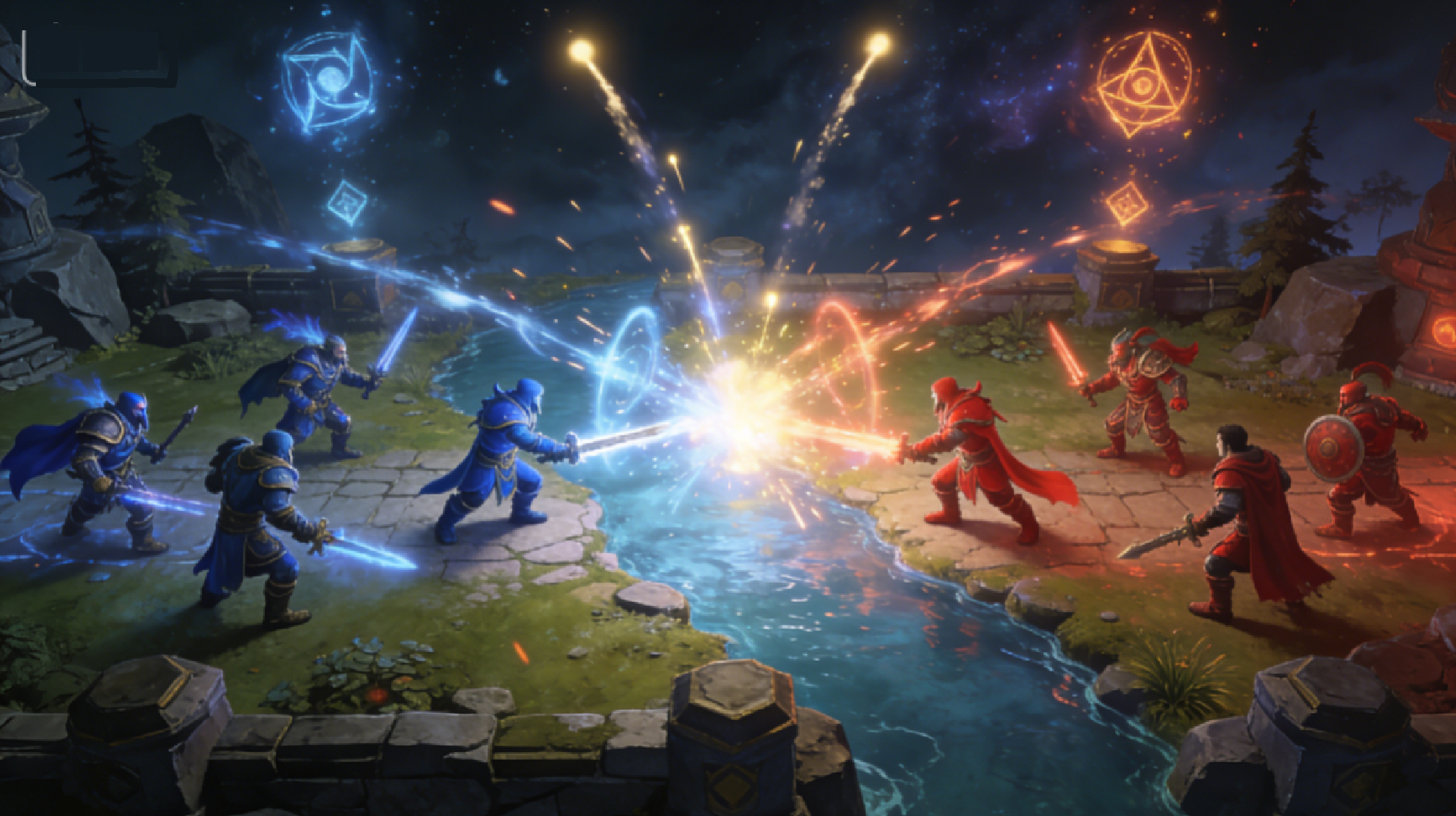
This time, the arena is the Fields of Justice in DOTA 2, where ancient forces clash and split-second choices rewrite fates.
“Can Neon 7 outplay the reigning TI champions before 2027?”
The question hasn’t just set the esports community ablaze—it’s pushing the boundaries of what we believe artificial intelligence can perceive and execute.
If DeepMind’s AlphaStar redefined RTS AI with its macro brilliance, then Neon 7’s showdown against Team Liquid—helmed by the mechanical prodigy Miracle—represents a new pinnacle: an AI that doesn’t just play the game, but navigates its unscripted chaos like a human veteran.
But this is no exhibition match. Google DeepMind has imposed two non-negotiable constraints on Neon 7, turning a test of code into a test of cognition:
1. Context-aware perception only
2. Equalized action-per-minute (APM) cap
The mission? Force the AI to interpret ambiguity, not just crunch numbers.
Why Chain the AI’s Strengths?
Let’s dispel a myth: Every dominant game AI before this has exploited a loophole—they’ve played with a cheat code called “perfect information.”
The Illusion of Fair Play: Direct Data Access
Early DOTA 2 AIs like OpenAI Five didn’t “watch” the game—they hacked into its backend. A creeps’ health, a hero’s cooldown, a ward’s expiration time—all existed as raw data points, not pixels on a screen. Fog of war? Irrelevant. Juking behind trees? Meaningless. They didn’t need to “predict”—they already knew.
Context Lock: From “Data Reader” to “Situation Interpreter”
DeepMind’s first rule is uncompromising: Neon 7 processes only the visual feed a human would see—240 FPS of chaotic combat, overlapping skill effects, and a minimap flickering with teammate pings. It must learn to distinguish between a fake retreat and a genuine escape, to read the “tell” of a BKB activation from the flash of a Blade Fury.
The real world doesn’t serve up data on a platter. A delivery drone can’t query a cyclist’s next turn; a surgical AI can’t pull up a tumor’s “cooldown.” Learning to parse DOTA 2’s visual chaos is practice for parsing the real world’s messiness.
APM Lock: No More Machine Precision
Older bots hit 3,000 APM, spamming spells and microing creeps with inhuman precision. That’s not skill—it’s hardware flexing. It teaches us nothing about how intelligence adapts under constraint.
Neon 7 is capped at 300 APM—the average of a top pro. Stripped of its ability to win via mechanical overload, it must master the human arts: timing, deception, and knowing when to hold back.
Neon 7’s Secret Weapon: A Library in Its Circuits
Unlike its trial-and-error predecessors, Neon 7 is built atop a 7-trillion-parameter multimodal foundation model—one that’s “studied” DOTA 2 like a scholar.
From Random Tries to Strategic Thinking
Old AIs learned by dying—billions of times—until they stumbled on winning patterns. Neon 7 starts with knowledge: it devours every patch note, analyzes 10 million pro replays, and even parses forums where players debate “meta breaks” and “counterpick psychology.” It doesn’t just memorize what works—it understands why it works.
See a Lion holding a Blink Dagger near Roshan? Neon 7 doesn’t just react—it connects the dots: Lion’s mana is full, Team Liquid’s carry is out of position, the clock hits 15 minutes (Roshan’s first spawn). Conclusion: “They’re setting up a gank—fall back to defend.”
Two Brains in One Machine
Running a superintelligent model in DOTA 2’s 10-millisecond decision windows is an engineering marvel. Neon 7 uses a dual-system design, mirroring human cognition:
• Slow Brain (Strategic): Scans the map, calculates farm disparities, and decides “push mid” or “secure Aegis.” It thinks in seconds, not milliseconds.
• Fast Brain (Tactical): Handles last-hitting, spell dodges, and teamfight positioning. It acts in the moment, but always under the slow brain’s guidance.
If it succeeds, we’re not just looking at a better gamer—we’re looking at an AI that can balance long-term planning with immediate action, just like we do.
Why DOTA 2? The Ultimate Test of Chaos
DOTA 2 isn’t just a game—it’s a laboratory for unpredictability. Unlike chess or Go, it’s a game of incomplete information, teamwork, and adaptability—exactly the skills AI needs to thrive in the real world.
Uncertainty as a Teacher
In chess, every piece is visible. In DOTA 2, a single invisibility rune can turn the tide. Humans learn to “feel” where enemies are; Neon 7 must learn to do the same—using sound cues (a Shadow Fiend’s attack animation), map gaps (no vision in the river), and teammate calls to fill in the blanks.
The 5-Mind Coordination Test
DOTA 2 isn’t 1v1—it’s 5v5. Neon 7 isn’t one AI; it’s five, each controlling a hero, that must communicate and adapt in real time. If Team Liquid initiates a fight with a Black Hole, can Neon 7’s five agents agree in 0.5 seconds to “focus the Enigma” or “save the support”? That’s not just gaming—it’s artificial teamwork.
Miracle and the Uncomputable Edge
Neon 7 is a master of probabilities. But DOTA 2’s greatest players are masters of defying them.
A 20% win rate teamfight? Neon 7 will avoid it. Miracle will dive in, land a perfect Chronosphere, and turn defeat into victory. That’s the human X-factor—creativity under pressure, the willingness to bet on the impossible.
What happens when Team Liquid pulls a “smoke gank” no AI has ever seen? When they sacrifice their carry to secure a Roshan? Neon 7’s models are trained on what’s happened before—but can it adapt to what’s never been done?
The answer won’t just decide a game. It will tell us how close AI is to understanding the one thing machines have always lacked: human chaos.