Alice
Alice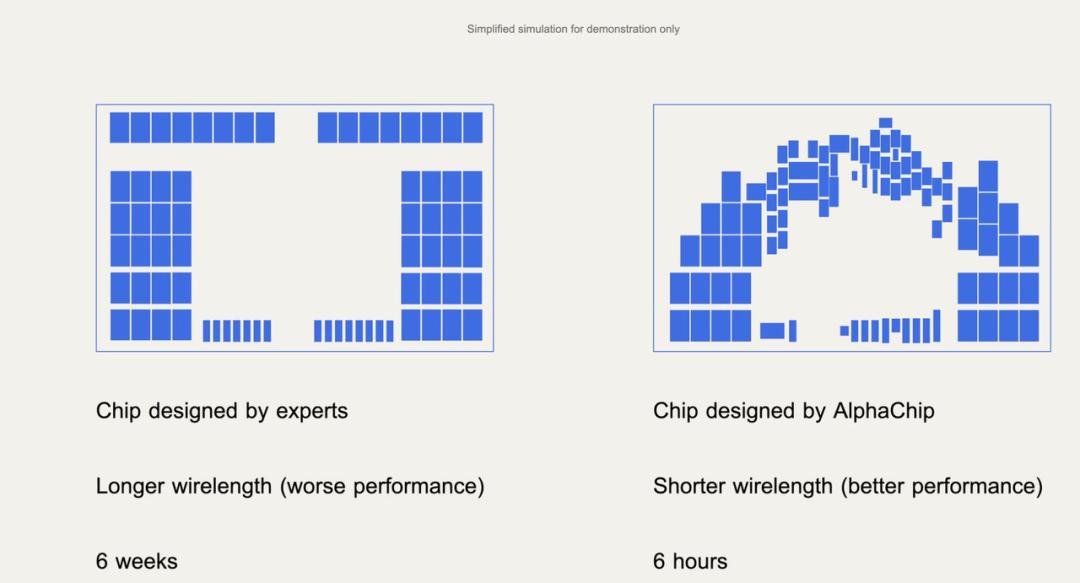
Recently, a startup named Recursive Intelligence, founded by two former Google researchers, has garnered significant attention for its ambitious mission: developing software capable of automatically designing cutting-edge chips. If successful, this would mean that any tech company could build its own chips from scratch.
In a tweet, co-founder Azalia Mirhoseini explained that the company is dedicated to achieving recursive self-improvement through AI, enabling artificial intelligence systems to autonomously design chips. Their transformative vision for chip design began with AlphaChip, an AI system designed for chip layout optimization. AlphaChip has already been used to design four generations of TPUs, data center CPUs, and smartphone chips.
“AlphaChip gave us a glimpse into the future: AI designing the chips that drive itself. At Recursive, we are extending that vision across the entire chip stack—building AI that can architect, verify, and implement chips, allowing models and chips to co-evolve in a tight feedback loop…”
In just a few sentences, a wealth of information is conveyed. In essence, Recursive Intelligence envisions a closed-loop, recursively accelerating cycle:AI designs chips → those chips power more advanced AI → that more advanced AI designs even better chips → and so on.Imagine the implications: if Recursive Intelligence’s vision becomes reality, it could bring about a disruptive transformation across both the AI and semiconductor industries.Let’s take a closer look at this ambitious startup.
Meet the Founders: Veterans of Google’s AlphaChip ProjectRecursive Intelligence was founded by Anna Goldie and Azalia Mirhoseini, both former researchers at Google.
- •Anna Goldie holds a Ph.D. in Natural Language Processing from Stanford University. She previously served as a Senior Research Scientist at Google DeepMind, where she led research on LLMs, reinforcement learning (RL), and tool use for Gemini. She is also a co-founder of the Systems Machine Learning team at Google Brain. Before that, she worked at Anthropic on Claude, RL, and retrieval-augmented systems.
- •Azalia Mirhoseini is currently an Assistant Professor at Stanford University and was formerly a Senior Research Scientist at Google DeepMind.
One of their most notable shared achievements—and a major highlight of their careers—is their leadership of Google’s AlphaChip project. The foundational paper for AlphaChip was published in Naturein 2020, which Mirhoseini referred to in her tweet as the origin of their “vision for transforming chip design.”
What Is AlphaChip?
AlphaChip is a novel reinforcement learning approach developed by Google DeepMind for chip floorplanning—the critical process of arranging components on a silicon die. It was among the first reinforcement learning methods applied to real-world engineering challenges and demonstrated the ability to generate chip layouts that outperform human-designed ones, while being faster, cheaper, and more energy-efficient.To put it in perspective: what once took human engineers weeks or months can now be accomplished by AlphaChip in just a few hours. This breakthrough technology has already been used in the design of multiple generations of Google’s AI accelerator chips, including TPU v5e and TPU v6.
Recursive Intelligence’s Innovation: Applying Recursive Intelligence to Chip Design
While the AI industry’s demand for chips continues to soar, companies like Amazon and Google have begun developing custom chips tailored for AI and data centers. These chips promise to be cheaper, more energy-efficient, and more compact. However, the custom chip development process remains costly, labor-intensive, and time-consuming, involving everything from architecture design to testing and mass production preparation. Typically, it requires an investment of hundreds of millions to billions of dollars and takes two to three years to complete. Even minor design flaws discovered late in the process can lead to costly delays or failures. Moreover, only a handful of companies globally possess the capability to develop custom chips.Unlike traditional Electronic Design Automation (EDA) tools, which rely on predefined algorithms and manual iterations, Recursive Intelligence aims to enable autonomous, continuous improvement of chip architectures through feedback loops.According to insights shared by the founders, Recursive Intelligence breaks down its innovation into three progressive stages:
- 1.Optimizing the most time-consuming parts of the current chip design workflow, reducing the typical 2–3 year design cycle down to just a few weeks.
- 2.Achieving end-to-end automated chip design. For a given workload or model requirement, the system will be able to automatically produce a complete, production-ready chip design—meaning that companies working on AR/VR, robotics, autonomous driving, and more can build custom chips without needing an in-house chip design team.
- 3.Creating a closed-loop recursive system:AI designs chips → those chips run more powerful AI → that more powerful AI designs even better chips → and the cycle continues.
Goldie and Mirhoseini believe that if they can fully automate this pipeline, any tech company could design its own chips from scratch in just weeks—or even days.
“We believe custom silicon chips will become widespread.”
Investor Interest and Valuation
Given the boldness of its mission and the stellar backgrounds of its founders, it’s no surprise that Recursive Intelligence has attracted strong interest from investors.The startup has reportedly caught the attention of over 50 venture capital firms and has already secured 35millioninfunding∗∗fromprominentinvestorsincluding∗∗SequoiaCapital∗and∗∗StrikerVenturePartners∗∗.Remarkably,despitenothavinglaunchedasingleproductyet,thecompanyhasbeen∗∗valuedat750 million, with its first product expected to launch next year.The news has sparked widespread discussion online. Sequoia Capital partner Stephanie Zhan described Recursive Intelligence as a true pioneer in the field of AI-driven chip design, aiming to:
“Pioneer a brand-new space that enables more people to design specialized chips for their unique applications,” and ultimately hopes to “reshape the $800 billion chip industry.”
In summary, Recursive Intelligence is poised to redefine how chips are designed and who gets to design them—ushering in a new era where AI and silicon co-evolve in a virtuous, self-improving cycle.