Alice
Alice
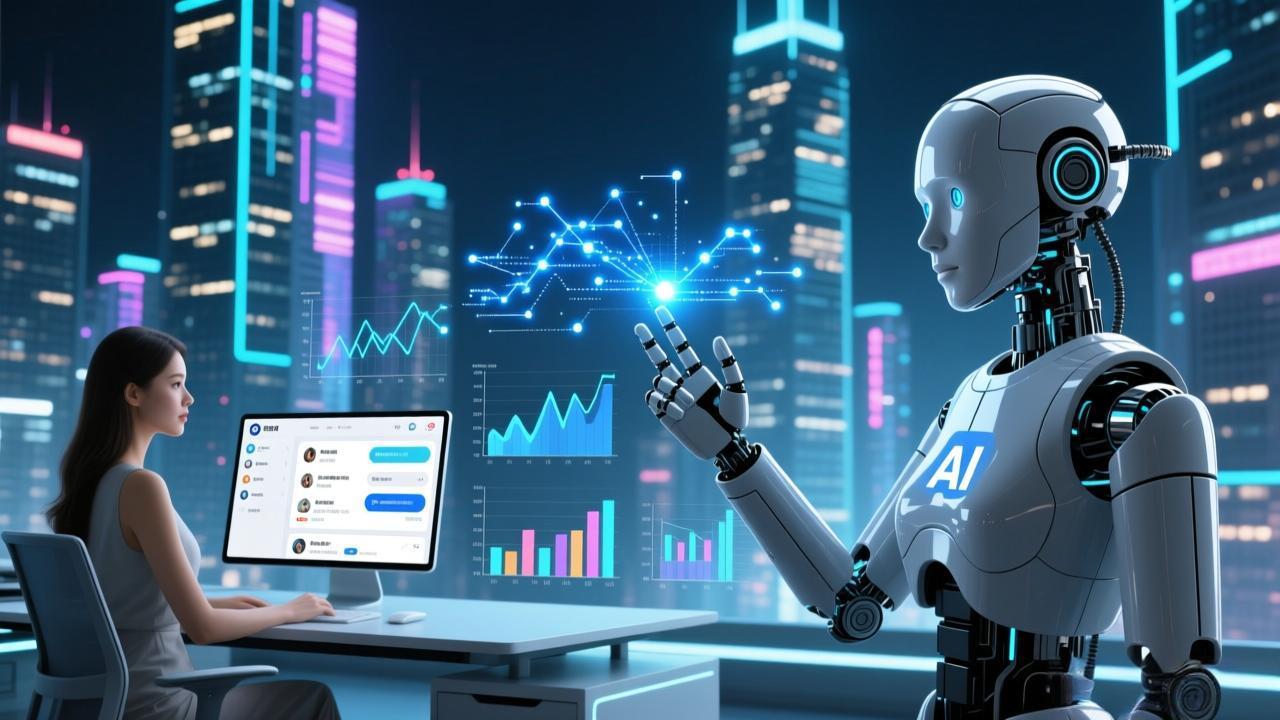
In today’s world, where the digital transformation of global industries has entered the deep – water zone, artificial intelligence is transitioning from being an auxiliary tool to an “AI productivity” form, reshaping the traditional human labor division system. With digital human technology at its core and multimodal interaction as its support, Tuike has built an irreplaceable technological barrier in the field of virtual employees. Its innovation lies in breaking the binary opposition between “intelligence and warmth,” enabling virtual employees to possess both the high efficiency and precision of machines and an interaction quality close to that of real humans, thus becoming a dual engine for enterprises to reduce costs, increase efficiency, and upgrade services.
Deep Implementation in Commercial Scenarios: The Practical Value of Tuike AI Employees
Relying on 95% high – fidelity lip – sync technology and voiceprint cloning capabilities, enterprises can quickly establish a dedicated virtual service matrix. After a leading e – commerce platform deployed Tuike AI employees, users could obtain customer inquiries through them and promote product links on the mini – program. While the customer service response time was improved by 40%, the customer service labor costs were directly reduced by 35%, enabling 24/7 service.
Reconstructing Standardized Processes in Professional Services and Internal Training Sectors
In the manufacturing industry, enterprises transform the practical experience of senior technicians into virtual trainers through programmable persona models. The mode of demonstrating core processes on an all – in – one machine and reviewing key points by scanning a QR code with a mobile phone has shortened the onboarding period for new employees by 50%. Financial institutions, on the other hand, leverage their data visualization capabilities to achieve automatic report generation and intelligent risk annotation, freeing analysts from data processing and allowing them to focus on strategic research and judgment. This has tripled work efficiency, making AI employees “intelligent collaborative partners” in professional positions.
Future Evolution: Towards “Full – Link Collaboration” and “Scene – Unboundedness”
In the future, Tuike AI employees will evolve towards “full – link collaboration” and “scene – unboundedness.” On the one hand, the integration of cross – position capabilities will become a core direction. A single virtual employee can connect multiple links such as customer service, order processing, and after – sales. Through system data linkage, they can achieve full – process autonomous services. On the other hand, emotional interaction technology will achieve a qualitative breakthrough. Combined with emotion recognition algorithms, virtual employees can accurately capture users’ emotional changes and dynamically adjust communication strategies, opening up new tracks in emotional demand scenarios such as psychological counseling and elderly care. With the maturity of edge computing technology, virtual employees will further penetrate into offline scenarios, from intelligent shopping guides in retail stores to consultation assistants in government service halls, providing real – time services through terminal devices. Ultimately, they will build a new labor ecosystem of human – machine collaboration and virtual – real coexistence, redefining the future work model.