Alice
Alice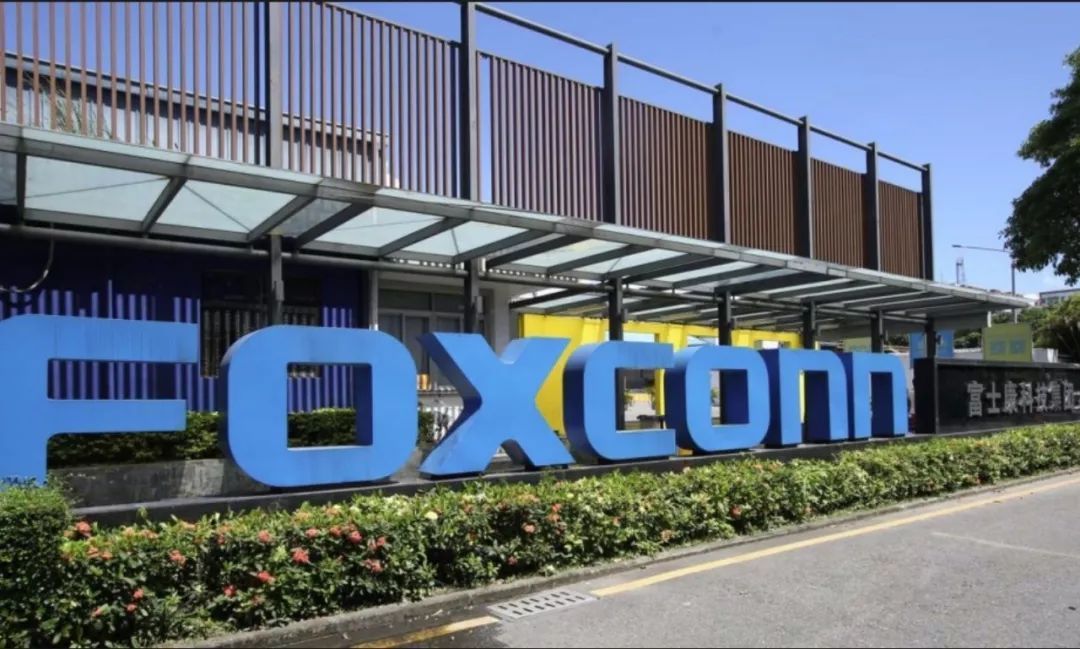
Recently, Foxconn Technology Group announced that its AI server business revenue surpassed iPhone-related business for the first time in the third quarter of 2025, marking the successful transformation of the world’s largest electronics contract manufacturing giant from consumer electronics to AI infrastructure.
This milestone achievement is the result of the systematic transformation led by Foxconn Chairman Young Liu since he took the helm in 2019.
Data shows that Foxconn’s AI server business revenue has broken through the 1 trillion New Taiwan dollars mark, becoming a new growth engine for the company.
From “Apple Dependence” to AI Transformation
In July 2019, when Young Liu took over Foxconn from founder Terry Gou, the company was highly reliant on the smartphone business, with Apple being its main client.
At that time, Foxconn’s dependence on Apple was over 70%, and smartphone business revenue accounted for the vast majority of the company’s total revenue. Facing the decline of the smartphone market and geopolitical tensions, Young Liu demonstrated keen market insight.
“We can’t continue to rely on the consumer electronics cycle. We need to shift to ‘non-consumer tech growth’,” Young Liu said in an interview in 2023.
He decisively adjusted the company’s strategy, shifting the focus from the iPhone to AI servers and forming a close alliance with AI chip giant NVIDIA. This decision received a positive market response, and Foxconn’s stock price has tripled since Young Liu took office.
In terms of AI server business revenue, in the third quarter of 2025, Foxconn’s subsidiary, Foxconn Industrial Internet Co., Ltd., achieved revenue of 243.172 billion yuan, a year-on-year increase of 42.81%; its net profit attributable to shareholders for the single quarter exceeded 10 billion yuan for the first time, reaching 10.373 billion yuan, a year-on-year increase of 62.04%. In the first three quarters of 2025, Foxconn Industrial Internet Co., Ltd. achieved revenue of 603.931 billion yuan, a year-on-year increase of 38.4%; its net profit attributable to shareholders reached 22.487 billion yuan, a year-on-year increase of 48.52%. Among them, AI servers and cloud service products accounted for 42% of total revenue, surpassing consumer electronics as the largest business segment for the second consecutive quarter. Young Liu expects server shipments to at least double by 2026.
To this end, Foxconn’s global production bases have also been adjusted accordingly. Over the past four years, the number of its factories, R&D centers, and sales offices worldwide has increased by 70%, reaching 233. India, Vietnam, Mexico, and the United States have become new key production centers.
Also at this year’s Hon Hai Tech Day, Foxconn and OpenAI announced a partnership to jointly advance the design of next-generation AI infrastructure hardware.
According to the agreement, Foxconn will invest 1.4 billion US dollars to build an advanced supercomputing center. The center will accelerate computing with 10,000 Blackwell Ultra GPUs and is expected to deploy the next-generation NVIDIA GB300 NVL72 AI infrastructure in the first half of 2026.
“The demand for key components of AI infrastructure has far exceeded supply chain capabilities,” said Sam Altman, CEO of OpenAI.
“The significance of the partnership lies in strengthening the supply chain to meet the existing and future needs of the entire industry.”
At the same time, Foxconn also deepened its cooperation with NVIDIA to jointly invest in building GPU clusters. Young Liu said at the 2025 Hon Hai Tech Day, “Our competitive advantage lies in vertical integration. Foxconn’s profound technological heritage and manufacturing tradition enable us to deeply collaborate with world-class tech leaders.”
Why AI Is the Right Transformation Direction for Foxconn
Before entering the AI server market, Foxconn also tried its hand at contract manufacturing electric vehicles, but the response was lackluster. Since 2019, Foxconn has attempted to replicate its successful path in the mobile phone industry in the smart electric vehicle sector, but has been frustrated by unstable clients and thin industry profits.
Compared with the electric vehicle business, the AI server market is highly standardized, has explosive global demand, and features rapid technological iteration, which is a natural extension of Foxconn’s advantages in the consumer electronics supply chain.
“AI infrastructure does not involve brand image, vehicle quality responsibilities, or front-end user risks, making it relatively stable and controllable,” an insider at Foxconn said.
Similar to the smartphone era, AI infrastructure is also a “supply chain-driven business” with the potential for large-scale, rapid replication, and cross-regional expansion. In the end, Young Liu decided to strategically abandon “car manufacturing” and shift to “computing infrastructure services.”
In fact, it can be seen from this that Foxconn has been continuing its strong “contract manufacturing” capabilities, except that the products it contracts to manufacture have changed from mobile phones to cars and then to AI servers.
However, contract manufacturing cars requires a higher level of brand power, which is precisely a shortcoming that Foxconn cannot make up for in a short time. In contrast, AI servers are relatively more stable and controllable and are exactly at the peak of demand.
In general, the AI era has created countless business myths, not only boosting the rise of dazzling tech startups but also revitalizing established tech companies in the midst of transformation pains.