Alice
Alice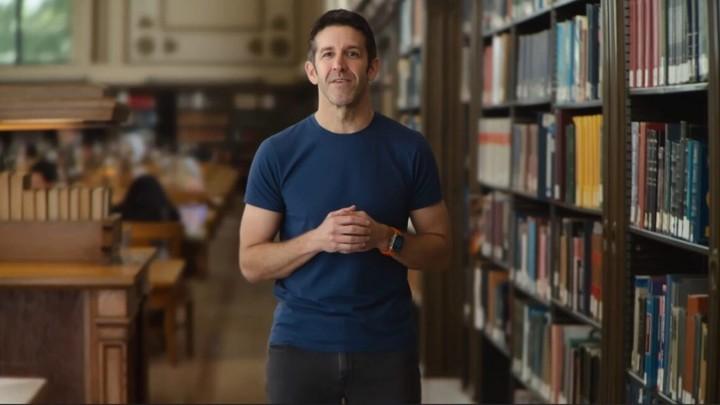
Mark Gurman of Bloomberg stated that Abidur Chowdhury’s departure had nothing to do with the poor sales of the iPhone Air. In fact, the design of the iPhone Air was highly regarded within Apple, and Abidur Chowdhury played a crucial role in it.
Born in London and now residing in San Francisco, Abidur Chowdhury is a young designer who is instantly memorable. Growing up in a multicultural city, he, like Jony Ive, received rigorous training in the British industrial design system while constantly contemplating the design of next-generation products. On his personal website, he elaborates on his design philosophy with the following sentence:
Nothing excites me more than creating innovative products that people can’t bear to part with.
He interned at Cambridge Consultants and Curventa in the UK. Later, Chowdhury worked as an industrial designer at Layer Design in London. From 2018 to 2019, he ran his own consulting firm, Abidur Chowdhury Design, collaborating with design agencies, innovation companies, and startups to provide product, experience, and design strategies.
In January 2019, just before Jony Ive left Apple, Abidur Chowdhury joined the company as an industrial designer in Cupertino, California.
In just six years, Chowdhury has participated in the design of a series of Apple’s most innovative products, including the iPhone Air. At an Apple product launch event, Chowdhury introduced the design concept of this iPhone as follows:
Our original intention was to create an iPhone for the future.
Now, Abidur Chowdhury is off to pursue his own future.
Since 2019, Apple’s design team has been relatively turbulent. Many veteran designers have either retired or left Apple to join other companies, including the design firm LoveFrom founded by Apple’s former Chief Design Officer Jony Ive and the AI hardware company io.
After Ive’s departure, Evans Hankey briefly took over the leadership of Apple’s design team until her resignation in 2022. Later, Evans Hankey, along with Jony Ive and several other former Apple employees, founded the AI hardware company io, which was acquired by OpenAI for a staggering $6.5 billion in July this year—to date, io has yet to release any hardware products.
The current head of Apple’s design, Molly Anderson, is one of the few designers who has remained at Apple since the Jony Ive era. She emphasizes a product design philosophy centered on essential intuition.
In an interview, she stated that during the design process, one should not be constrained by existing products but rather focus on designing the most suitable tools for user needs, emphasizing the integration of software and hardware. The latest ultra-thin iPad Pro and the design of the iPhone 17 Pro were led by Molly Anderson.
Just last week, Apple’s second-in-command and Chief Operating Officer Jeff Williams retired. Previously, the Apple design team was under Williams’s purview, but it will now report directly to Apple CEO Tim Cook.
For Apple, declining company attractiveness, severe talent drain, and a lack of young talent to take over are major challenges the company is currently facing, especially as next year marks the 50th anniversary of Apple’s founding.
According to The Financial Times, Apple CEO Tim Cook is accelerating his succession plan, with John Ternus, the current Senior Vice President of Hardware at Apple and a strong contender for the next CEO, set to take on a significant role.