Alice
Alice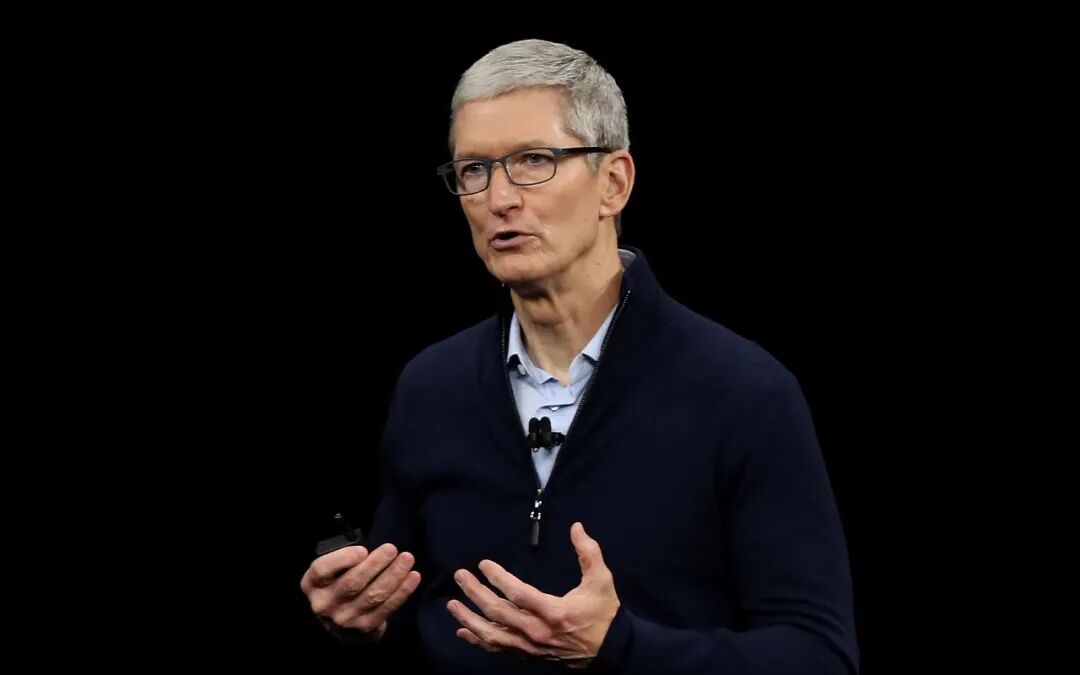
As the world moves closer to 2026, Apple may be standing at the threshold of one era’s end and another’s uncertain beginning.
According to multiple sources, Apple’s board is quietly and meticulously planning for the succession of its long-time leader, Tim Cook. The leading candidate to take the reins is not a strategist known for software or services, but rather the head of hardware engineering — John Ternus.
This decision is far more than a routine leadership change. Like a prism refracting light, it reveals Apple’s deep introspection about its core strengths and a strategic bet on its future path — all unfolding amid the sweeping tide of artificial intelligence.
Under Cook’s leadership, Apple has built an unparalleled business empire, achieving unprecedented financial health. Yet, in the global race to define the next generation of technology — particularly artificial intelligence — Apple has rarely led. In fact, it is increasingly seen as a “chaser.”
At the heart of this leadership transition lies a pivotal question: How can Apple transform its formidable financial strength into a ticket to the age of Artificial General Intelligence (AGI)?
01 The Legacy of Cook
To understand the choices being made for the post-Cook era, we must first examine the legacy he leaves behind.
When Cook took over from Apple’s legendary co-founder Steve Jobs in 2011, he inherited a company celebrated for revolutionary products like the iPhone, yet still grappling with operational inefficiencies. His mission was clear: to become a master “empire architect” and “operations guru.”
During his tenure, Apple’s market capitalization soared from around 350billiontonearly3 trillion — peaking at over $4 trillion — making it the first publicly traded company in history to reach such heights.
He vastly expanded Apple’s boundaries:
On one front, he maximized the potential of the iPhone, building a global hardware ecosystem that now serves over a billion active users.
On another, he aggressively grew the services business — including the App Store, Apple Music, iCloud, and various subscription offerings — which now generates nearly $100 billion annually, accounting for a quarter of total revenue. These services provide steady, recurring income that smooths out the cyclical nature of hardware sales.
Additionally, products like the Apple Watch and AirPods became category leaders, while Apple’s self-developed M-series chips replaced Intel processors across the Mac lineup, breathing new life into its computing division.
Notably, behind these hardware triumphs was the significant contribution of Ternus and his team.
In many ways, Cook transformed Apple from a company reliant on the charisma of a singular visionary into a mature enterprise driven by systems and processes. He demonstrated that excellence in operations can, in itself, be a form of powerful innovation.
02 A Shifting Power Landscape
Yet just as Cook had honed Apple’s business machine to near perfection, the tech industry’s power structure began to shift dramatically — driven by the rise of artificial intelligence, especially generative AI.
Over recent years, companies that have shown clear leadership in AI — such as Microsoft with its cloud infrastructure and partnership with OpenAI, Google with its Gemini models, and Nvidia as the supplier of AI compute “ammunition” — have been rewarded with soaring valuations.
In contrast, Apple’s stock performance has lagged behind.
This highlights Apple’s central challenge: under Cook, the company has not launched a product that redefined an entire industry like the iPhone once did.
The Apple Watch and AirPods are commercial successes, but they represent refinements within existing categories. Even the Vision Pro headset, unveiled in 2023, showcases impressive engineering but remains a high-priced, niche exploration.
More pointedly, the criticism centers on AI.
Apple introduced the concept of consumer AI to the masses with Siri back in 2011, but over the following decade, Siri’s capabilities stagnated, falling behind competitors like Google Assistant and Amazon Alexa in understanding and utility.
Then came the game-changer: ChatGPT, launched at the end of 2022, redefined the dimensions of AI competition. It wasn’t just a voice assistant anymore — it became a “general intelligence tool” capable of generating text, code, and images. Microsoft and Google quickly integrated large language models into their core products, seeking to reshape productivity, search, and cloud services.
Apple’s response, by contrast, focused largely on on-device machine learning — emphasizing privacy-preserving features like photo enhancement and typing predictions — often lacking a cohesive, ambitious narrative around generative AI.
Wall Street analysts have begun to question whether Apple needs a different kind of leader in this new AI-driven cycle. Former Apple CEO John Sculley even stated bluntly that AI is Apple’s weak spot, and that OpenAI could become its most formidable competitor in decades.
These critiques strike at the heart of Cook’s background — he is an unrivaled operator and business strategist, but not necessarily known for “visionary invention” or the ability to define entirely new technology paradigms from scratch.
This raises a critical issue: as the rules of the industry are rewritten by AI, Apple’s historically successful formula of “waiting, integrating, and then surpassing” is facing its most severe test yet.
03 The Meaning of Ternus
In this context, the board’s inclination to choose John Ternus carries profound symbolic weight. It signals how Apple intends to engage in the AI race:
Ternus is a quintessential “Apple-made” hardware expert. Joining the company in 2001 as a product design engineer, he has been deeply involved in the development of the original iPad, multiple generations of iPhones and Macs, and played a central role in Apple’s strategy to develop its own M-series chips.
Selecting him signals Apple’s belief that its competitive edge in the AI era will still stem from what it does best: designing premium hardware, building custom silicon chips with unmatched performance and efficiency, and achieving seamless vertical integration of software and hardware.
This approach may seem contrary to the industry norm.
Leaders like Microsoft’s Satya Nadella and Google’s Sundar Pichai are software and platform veterans, focusing on making AI an omnipresent cloud service. Apple, by contrast, appears poised to hand the reins to a hardware-centric leader.
Through the lens of Apple’s historical strategy, this makes sense: Apple rarely aims to be the first, but excels at waiting until technologies mature, then delivering more refined, complete user experiences through superior industrial design, chip optimization, and a tightly controlled ecosystem. The iPod for MP3 players, the iPhone for smartphones, and the Apple Watch for wearables all followed this pattern.
Thus, Apple may be betting that the next breakthrough in AI will come from running powerful models efficiently on personal devices — offering more immediate, private, and personalized experiences — as opposed to relying solely on cloud-based processing.
Ternus understands how to design neural engines in chips, balance performance and power consumption, and tailor devices for local AI computation. If the next phase of AI competition is won on the “device side” rather than just the “cloud,” then Ternus may be the ideal leader to execute that vision.
04 The Steward of an Empire
If John Ternus ultimately ascends to the CEO role, he will not simply inherit a throne — he will assume the mantle of a “steward of empire.” His challenge will be to navigate a series of high-stakes balancing acts between continuity and change, perfection and risk — all of which will shape Apple’s fate.
First, he must confront the “curse of growth.”
Apple’s $3 trillion valuation represents both its crowning achievement and its greatest gravitational burden. With the global smartphone market largely saturated, the era of exponential growth driven by the iPhone is nearing its natural limits.
While the services business serves as a strong secondary engine, its expansion is tightly coupled with the vitality and exclusivity of the hardware ecosystem — an exclusivity that is increasingly under regulatory scrutiny worldwide.
Creating the next “iPhone-level” product category is the only way to break the curse — but since Cook’s era, this has remained an unresolved existential challenge. The Vision Pro hints at the company’s technological ambition and engineering prowess, but whether it will discover new markets or lead the broader fleet remains uncertain.
Ternus’ test will be to become both a master “efficiency expert,” squeezing every ounce of profit from mature markets, and a visionary “explorer,” seeking untapped opportunities in uncharted territory that could unlock billions in new value.
Second, he faces the “unraveling and rebuilding of rules.”
Under Cook, Apple was not just a player in the tech ecosystem — it was also, to a significant degree, the author of its own rules. Through its closed, hardware-software integrated garden, it enjoyed unmatched control over user experience and profitability.
But the outside world is pushing back. The EU’s Digital Markets Act, which mandates app sideloading, is more than a new feature — it’s a wedge that threatens to dismantle the foundation of Apple’s walled-garden business model.
Meanwhile, on the geopolitical tightrope, Apple must tread with increasing caution, demanding that its next leader possess not just business acumen, but the wisdom and resilience of a diplomat.
All these challenges converge on one focal point: the battle for dominance in the age of artificial intelligence.
This may be the ultimate arena where Ternus’ mettle will be tested. His hardware expertise is both Apple’s greatest asset in this fight and potentially its deepest constraint.
Apple’s bet on “on-device AI” is an idealistic yet technically treacherous path. It promises privacy, immediacy, and personalization — but it also means cramming intelligence into tiny chips constrained by battery life and physical limits.
Ternus will need to prove that the Apple he leads can not only build the fastest AI-capable hardware, but also deliver “local intelligence” that creates disruptive, habit-changing, and demand-generating user experiences.
His challenge is not just external competitors, but time. While Microsoft and Google iterate rapidly using cloud-based infrastructure to push the boundaries of AI capability, can Apple’s perfectionist hardware development cycles keep pace with AI’s breakneck speed? That remains an open question.
Ultimately, Ternus’ trial is about transforming a system built for certainty into one capable of navigating — and even leading — in uncertainty.
He doesn’t need to be the next Cook, nor the next Jobs. What he must do is evolve from a “hardware philosopher” into a “strategic architect,” translating his deep knowledge of silicon and metal into a bold new vision for human-machine symbiosis.
The empire he inherits has been built on a rock-solid foundation by Cook. Now, it’s his turn to erect a new tower atop it — one suited to the climate of the AI age, and perhaps even radically different in style from what came before.
05 A Skyscraper Upon a Palace
Apple’s decision to choose Ternus reflects a reinforced bet on its past success formula.
The board believes that the “integrated hardware-software” model perfected under Cook remains not only relevant but even more valuable in the AI era. They are counting on Ternus to both preserve that core strength and push the envelope with more aggressive, successful innovations in on-device AI.
Yet the market seems to be sending a different signal: in an age where AI technology evolves by the week, relying on lengthy hardware development cycles might cause Apple to miss the chance to define new platforms. Leading players are instead embedding AI deeply into cloud services and operating systems, offering them as open platforms.
Tim Cook’s legacy lies in proving that Apple could not only survive but thrive after the loss of Steve Jobs — building a robust, stable system capable of generating enormous, consistent cash flow.
Now, Cook’s successor — whether Ternus or someone else — faces a more complex mission: to demonstrate that this very system, forged in the era of mobile computing, can not only defend itself against disruption but also evolve proactively and lead the next wave of innovation.
The post-Cook era for Apple is not about starting from scratch. It’s about constructing a skyscraper atop a magnificent palace — one designed to withstand the storms of AI and offer a new vision for the next decade.
This leadership transition is not merely about who will lead a company. It’s a defining test for the future of the tech industry itself: Will the age of AI be device-centric — or cloud-dominated?