Alice
Alice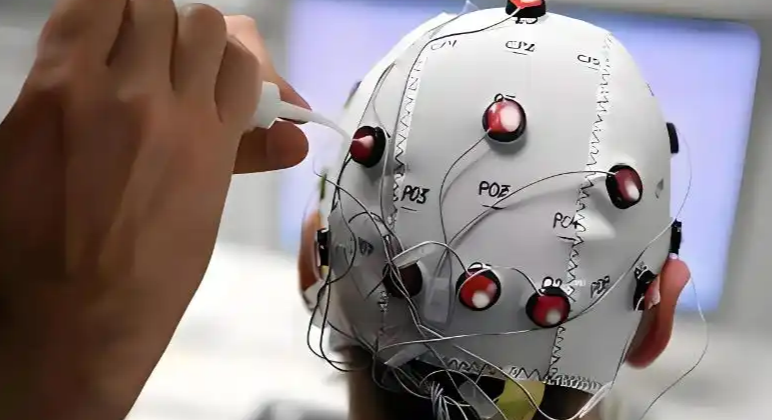
Just a few days ago, a shocking event occurred in an operating room in London that left the global AI community and the medical field astounded.
A man suffering from motor neuron disease, almost completely paralyzed, was able to control a computer using only his “thoughts” after having Elon Musk’s brain-computer interface device implanted.
This was not a simulated scene from a laboratory or a special effect from a sci-fi movie, but rather a real-world “button” that restarted the human brain.
This scene inspired both awe and curiosity, as well as a touch of fear.
After all, when thoughts can be read by machines, the boundary between humans and technology becomes blurred.
The man’s name is Paul.
Mind Reboot: Paul Controls Computer with Consciousness
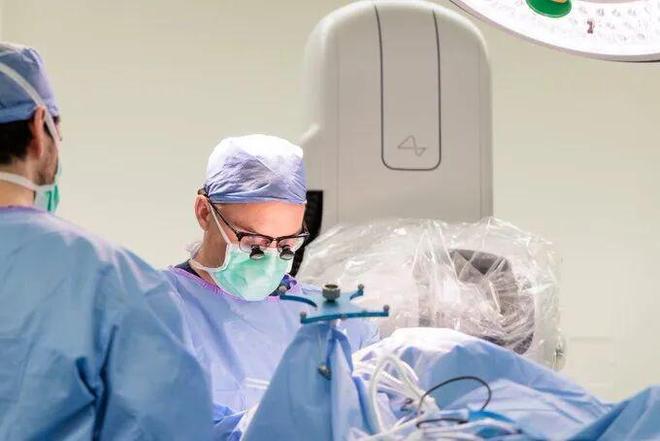
In the operating room at University College London Hospital, doctors gathered around a precision mechanical arm.
It was Neuralink’s surgical robot R1. Capable of implanting electrode wires, which are thinner than a hair, into the cerebral cortex with microscopic precision.
The recipient of the surgery was a British man named Paul, who had motor neuron disease. This condition causes the nerves to gradually degenerate, eventually leading to the loss of speech and motor abilities.
For Paul, even the desire to speak had become a futile signal.
After the implantation was completed, a coin-sized device was installed on his skull. Through wireless connection, the electrical signals in his brain were transmitted in real-time to an external computer.
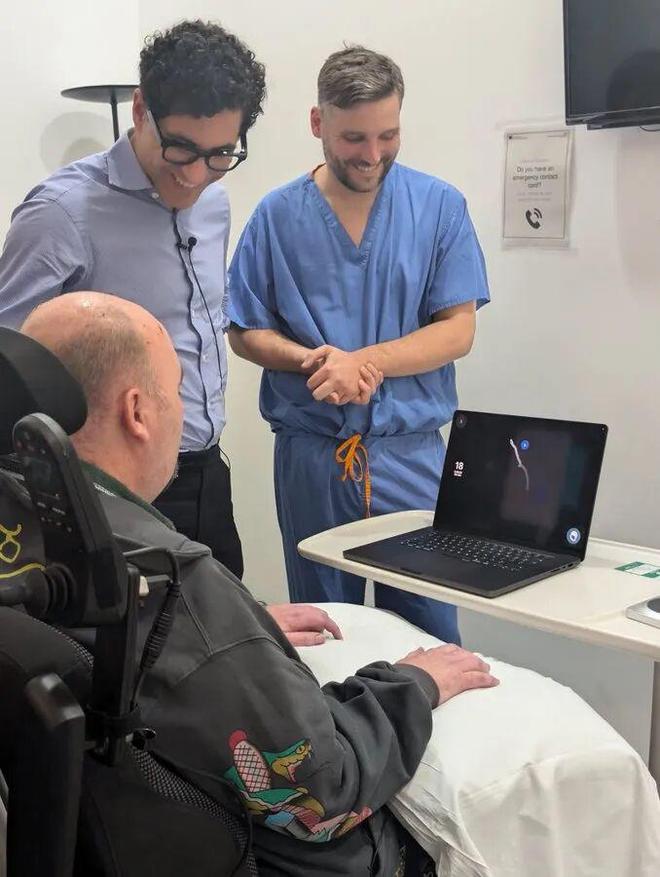
Several hours later, the doctors asked him to try “imagining” himself moving the cursor.
The arrow on the screen swayed gently. The first time, he couldn’t control the direction. The second time, the cursor began to slide slowly to the right. After a dozen minutes, Paul typed the first word on the screen: Hello.
At that moment, his family, sitting in front of the monitoring screen and seeing him “speak” again, couldn’t help but shed tears.
Neuralink’s chip implantation in the UK is part of its international clinical research program GB-PRIME, with collaborating institutions including University College London Hospital and Newcastle upon Tyne Hospitals NHS Foundation Trust.
Perhaps for Neuralink, these signals are just digital streams; but for these patients, it means that after years of silence, their brains can finally be “rebooted”.
Thoughts Translated into Commands: How Does Neuralink Read the Brain?
The core device of Neuralink is the N1 chip.
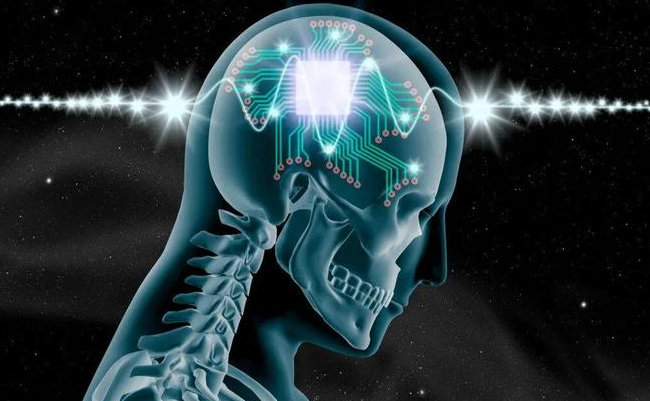
Smaller than a coin, it can connect to the cerebral cortex via 64 electrode wires, thinner than a hair, and capture the electrical signals of thousands of neurons.
Neuralink states that its device can help people with severe illnesses control external devices.
These signals themselves have no semantic meaning, resembling a jumble of electrical noise.
The working principle of the chip is to have AI models “learn” the patterns behind these signals—when a person has thoughts of “moving,” “clicking,” or “picking up,” specific neural patterns are activated in the brain.
After the surgical robot completes the implantation, the chip begins working immediately. Almost as soon as the patient wakes up, it can capture real-time changes in neural activity in the brain.
Neuralink describes the process as follows: Our system can record the activity of individual neurons with high fidelity and use machine learning algorithms to map specific neural patterns to specific operational intentions.
This means that the brain doesn’t need to produce sounds or movements; as long as it thinks, the machine can understand.
A few months ago, Neuralink posted new experimental footage on its official X account:
Nick, a patient with amyotrophic lateral sclerosis who had lost the ability to move his arms, was now using the brain-computer interface to control a robotic arm and steadily bring a spoon to his mouth.
Neuralink also showcased the training progress of another participant, Paul.
Not only can he control the computer cursor with his thoughts, but he is also working with engineers to try using the chip to play his favorite game, Dawn of War.
In these two videos, the boundaries between AI, neuroscience, and mechanical systems were completely broken down.
Machines are no longer just “tools” but extensions of the body; consciousness is no longer trapped in the mind but can directly interact with reality.
This is exactly Elon Musk’s vision:
Neuralink’s goal is to make human thinking an integral part of computation.
Miracles and Anxieties Coexist: Where Is the Boundary of Thought Freedom?
As miracles are continuously replicated, they begin to transform into a new reality.
According to data released by Neuralink, 12 participants worldwide have currently had its brain-computer interface devices implanted, with a cumulative usage time exceeding 15,000 hours and a total wear time of 2,000 days.
From London to California, more and more brains are connecting with chips. Human thoughts are beginning to appear in data tables in the form of neural activity.
Those flickering dots represent the firing of neurons; behind these numbers are lives still striving to be rebooted.
However, the problems are also clearly laid out.
Currently, Neuralink’s clinical research is still in its early stages. All participants face the same risks: the implanted device may become infected, shift, fail, and signal attenuation may lead to unstable data decoding.
The deeper concern lies in the ownership of the data. In brain-computer interfaces, the most core resource is not the chip but the “brain signals” themselves.
These are a person’s most private activities: memories, desires, hesitations, and impulses.
Who should have control over this data that is collected, stored, and analyzed? Should it be hospitals, companies, or the patients themselves?
In response, The Guardian commented, “When we view the human brain as an information system, we must consider: Who has the right to access it? And who can turn it off?”
In some academic discussions, researchers have proposed the concept of “neuro-rights,” which is seen as a new form of human rights that humanity must confront in the future.
Chile and the European Union have already begun drafting relevant legislation to try to limit the abuse of brain data by companies.
But reality is clearly outpacing legislation. In Musk’s vision, Neuralink’s ultimate goal is not just medical assistance but to enable direct symbiosis between humans and AI.
If that day truly arrives, our thoughts, emotions, and even dreams may become inputs for algorithms.
For Nick and Paul, all of this is just about having their lives rekindled; but for humanity as a whole, it is also a new boundary exploration.
We are standing at a crossroads: on one side is “technology giving people back their voices,” and on the other is “thoughts beginning to be recorded.”
And the brain-computer interface is the light that blurs the line between the two.
Paul typing the first “Hello” on the screen and Nick using his thoughts to make a robotic arm feed himself are seemingly small actions, but they are actually redefining the meaning of “connection.”
Technology has allowed them to be heard by the world again and has also let us see the potential of humanity anew.
But amidst the miracles and anxieties, we also need new courage to face a future that is gradually understanding us.